Wei Collection, Lower Volume
Radical: Meat (ròu)
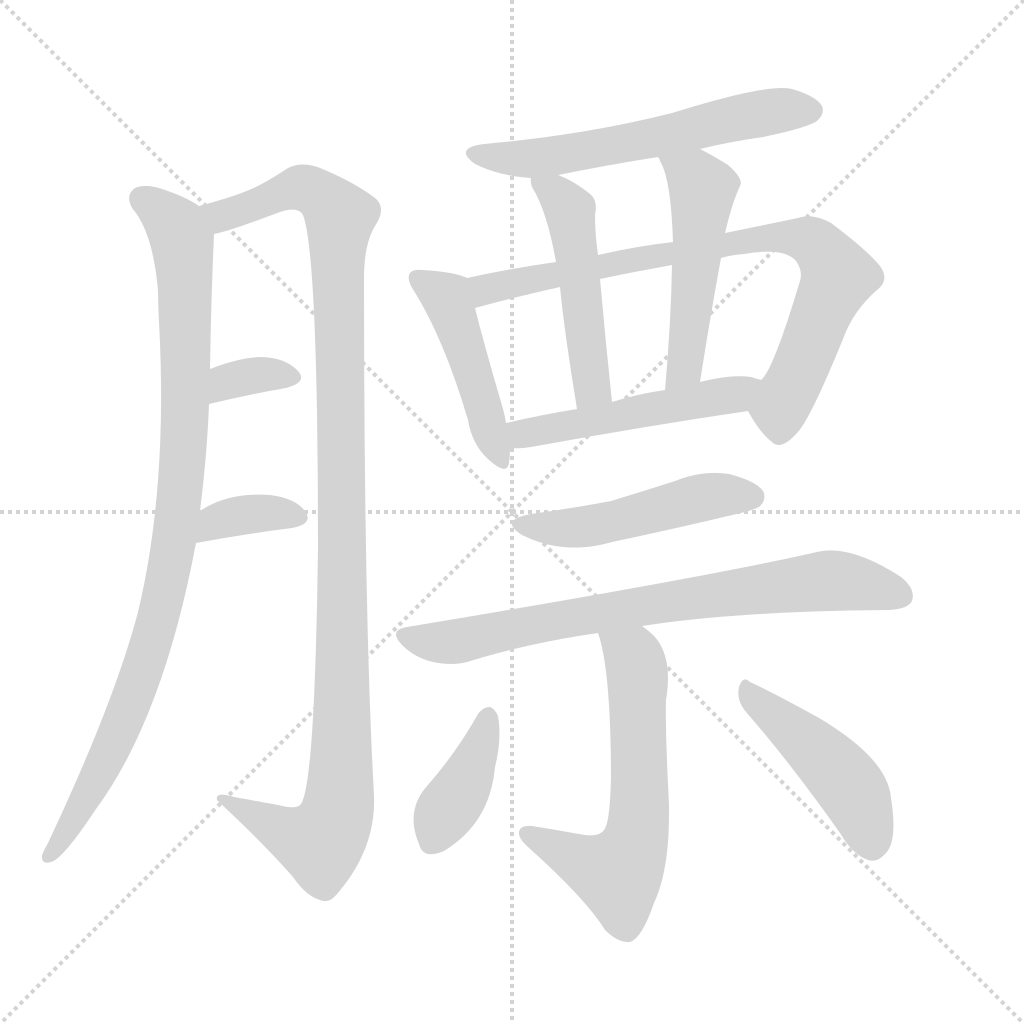
膘
Kangxi Strokes: 17
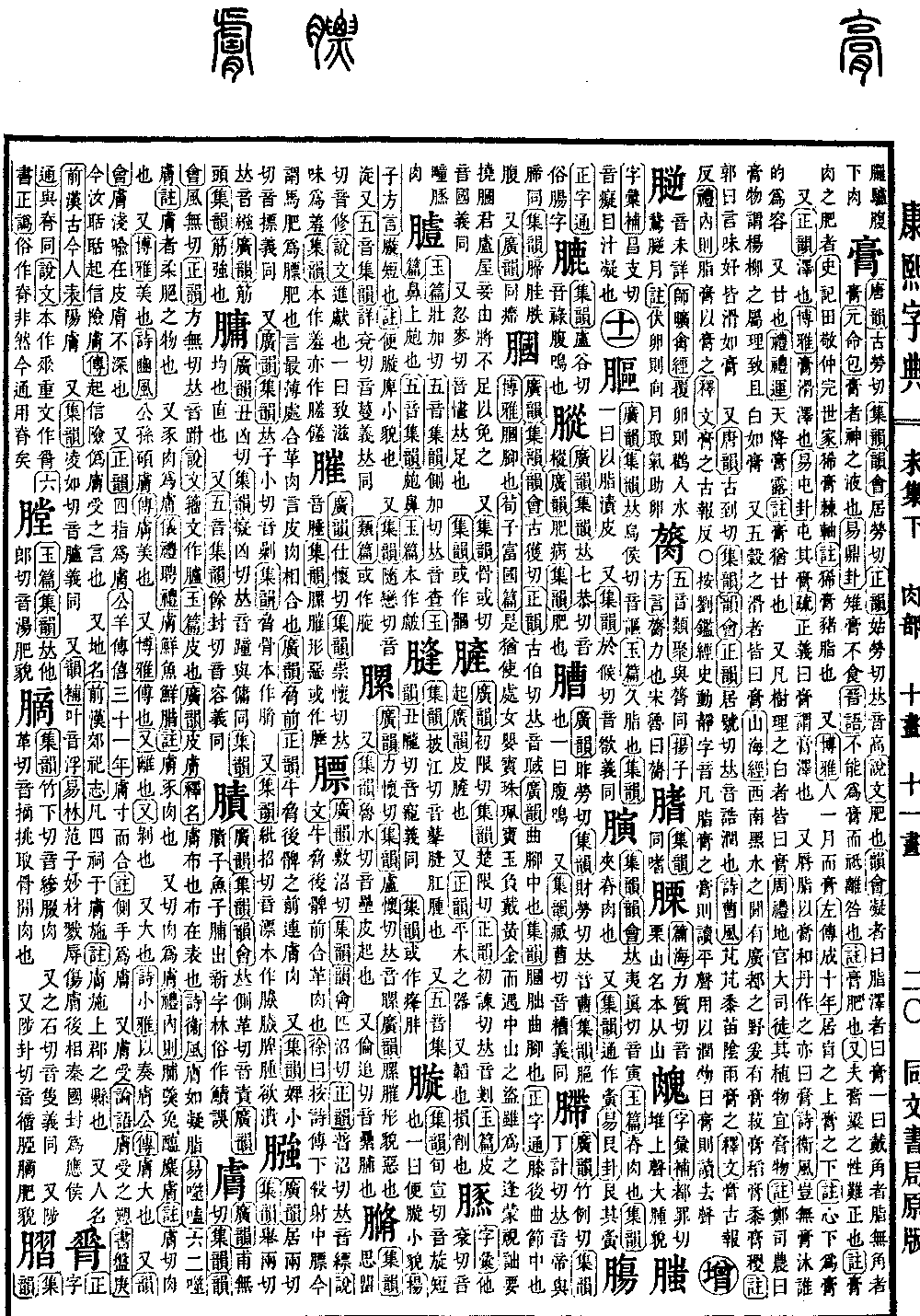
Page 992, Entry 24
Broad Rhymes (Guangyun): Pronounced piao (rising tone).
Collected Rhymes (Jiyun) and Dictionary of Rhymes (Yunhui): Pronounced piao (rising tone).
Correct Rhymes (Zhengyun): Pronounced piao (rising tone).
Pronounced piao (rising tone).
Explaining Graphs and Analyzing Characters (Shuowen Jiezi): The flesh behind the ribs and before the thighs of an ox, where the skin and meat join. Xu says: According to the Commentary on the Book of Odes (Shijing), to strike the target at the flank. Nowadays, when a horse is fat, it is called fat (piao). This refers to the thinnest part where skin and meat meet, meaning the skin and meat are joined together.
Broad Rhymes (Guangyun): The front of the ribs.
Correct Rhymes (Zhengyun): The skin and meat connected between the back of the ribs and the thighs of an ox.
Also Collected Rhymes (Jiyun): Pronounced biao (rising tone). The meaning is the same.
Also Broad Rhymes (Guangyun) and Collected Rhymes (Jiyun): Pronounced qiao (rising tone).
Collected Rhymes (Jiyun): The rib bones. Originally written as the character with the meat radical.
Also Collected Rhymes (Jiyun): Pronounced piao (even tone). Originally written as the character with the meat radical. The character signifies swelling about to ulcerate. The character was originally written incorrectly with the moon-meat component.