You Collection, Upper Volume
Radical: See (jiàn)
Kangxi Strokes: 12
Page 1134, Entry 33
Pronounced chǎn. Pronounced chǎn. Pronounced chǎn (level tone).
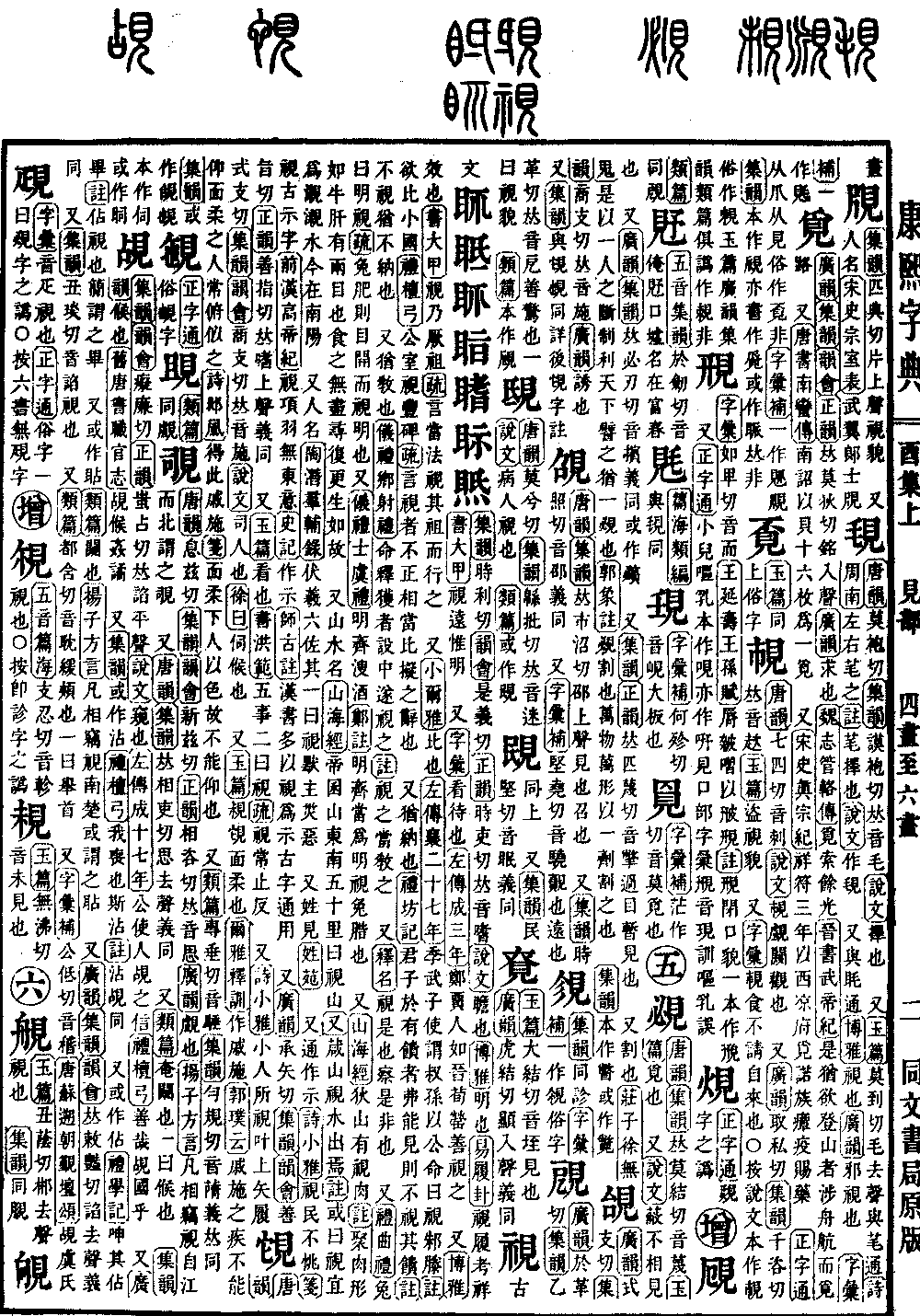
Shuowen Jiezi explains this as to peep or spy.
Zuo Zhuan (Zuozhuan), seventeenth year of Duke Cheng: The Duke sent men to spy, and the situation was confirmed as true.
Book of Rites (Liji), Tan Gong: Well said, thus observing the state.
Guangyun explains this as to scout or reconnoiter.
Old Book of Tang (Jiu Tangshu), Treatise on Official Posts: To scout for treacherous plots.
Jiyun notes that it is sometimes written in a variant form (zhān).
Book of Rites (Liji), Tan Gong: My funeral was thus watched by the crowd. Note: (zhān) is the same as (chǎn).
It is also sometimes written in a variant form (zhān).
Book of Rites (Liji), Xueji: Reciting the bamboo slips of the text. Note: (zhān) means to look. The slips are called bi.
It is also sometimes written in a variant form (chǎn).
Leipian explains this as to peep.
Yangzi: Dialect (Fangyan): Whenever one peeps stealthily, in the southern Chu region, it is sometimes called (chǎn).
Pronounced chǎn (departing tone). The meaning is the same.
Jiyun: Pronounced chǎn. Meaning to look.
Leipian: Pronounced dān. Meaning to gently persuade or advise. Another interpretation suggests it means to lift the head.
Zihui Bu: Pronounced jī.
Tang dynasty Su Su: Chaotian Tan Song: Observing the Yu clan.