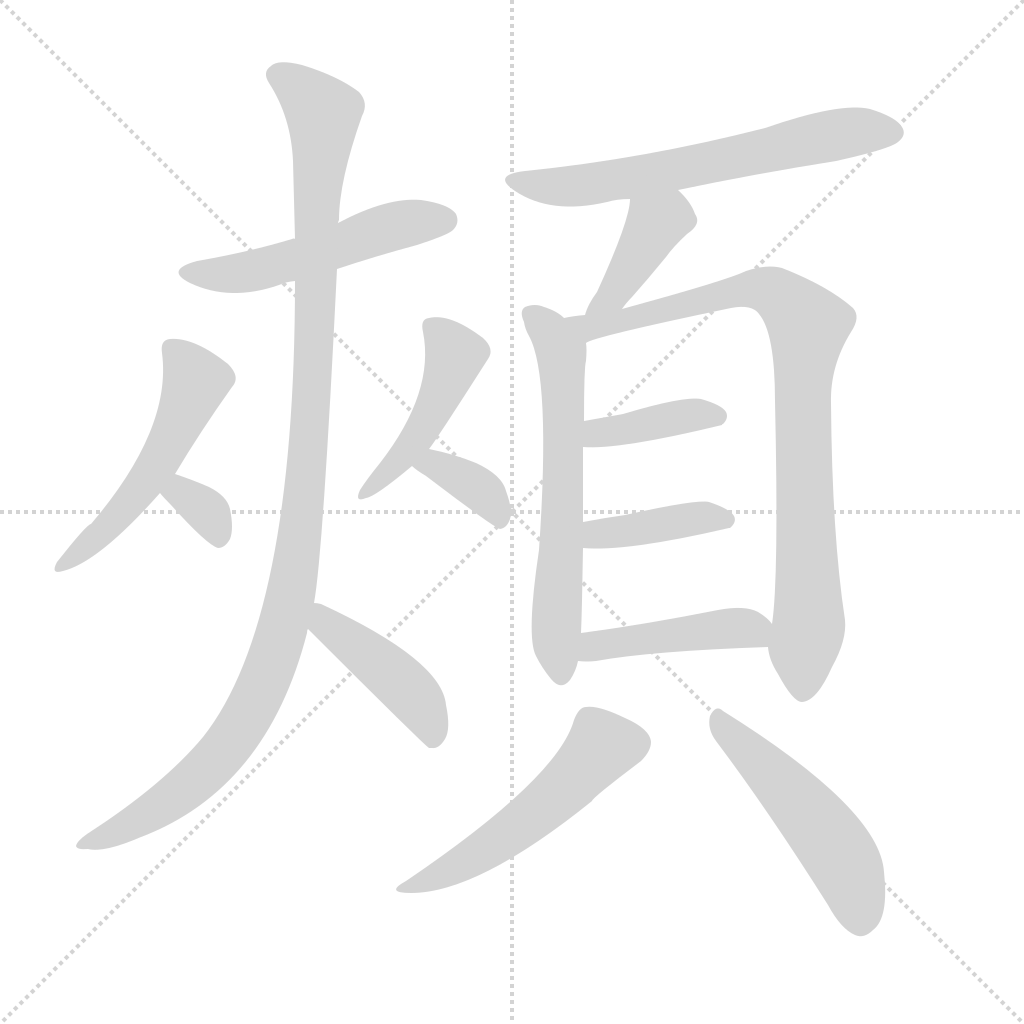
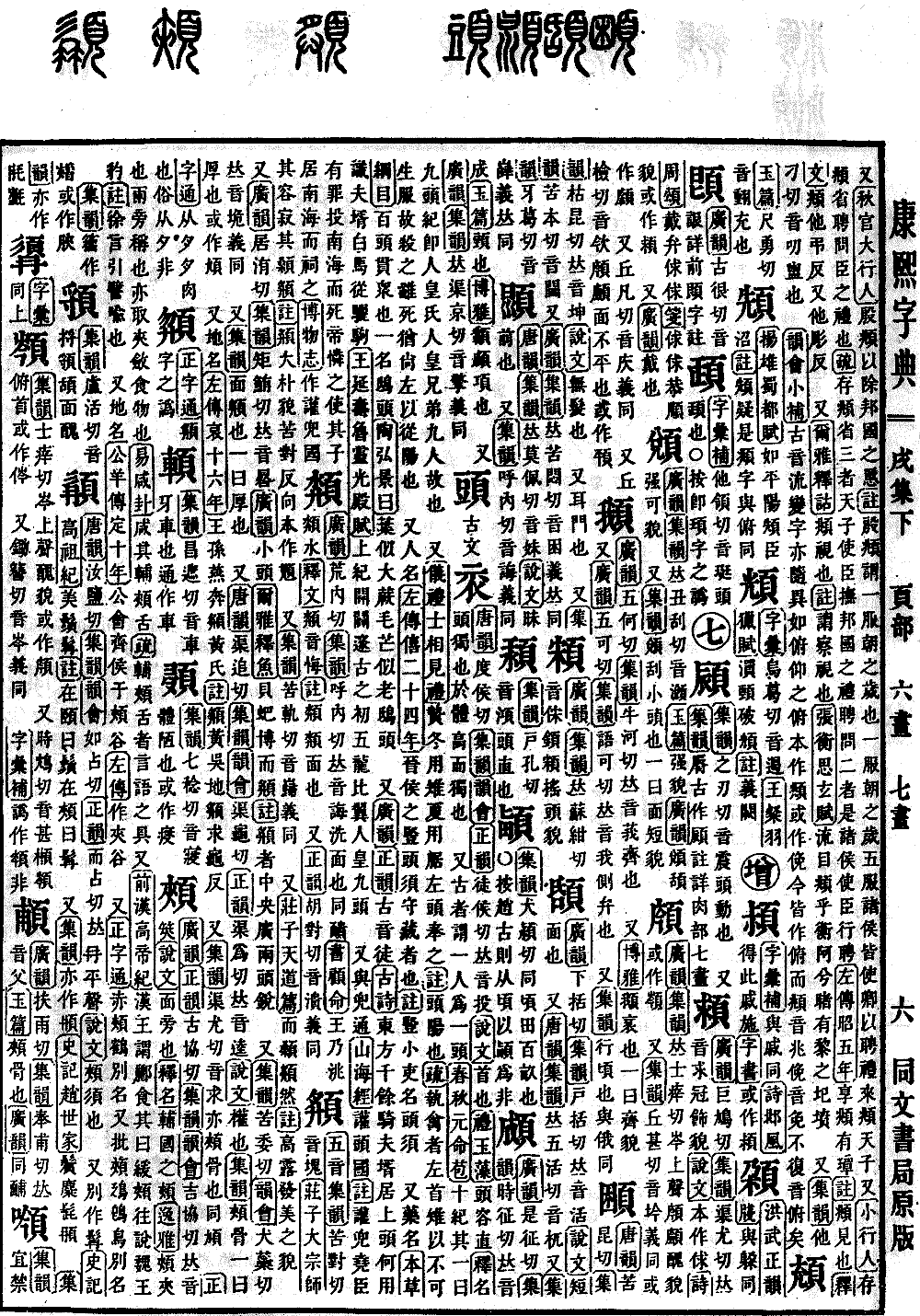
Xu Collection, Lower Volume
Radical: Leaf (yè)
Kangxi Strokes: 16
Page 1404, Entry 27
Pronounced jia.
According to the Shuo Wen Jiezi (Shuo Wen): The side of the face.
According to the Guang Ya (Boya): The cheek is called jia.
According to the Shi Ming: The word jia means to clamp; it refers to the two sides. It also implies the function of clamping and gathering food.
Book of Changes (Yijing), Hexagram of Xian: To influence through the cheeks, jaws, and tongue.
Commentary: The cheeks, jaws, and tongue are the instruments of speech.
Also, in the History of the Former Han (Qian Hanshu), Annals of Emperor Gaozu: The King of Han said to Li Yiji: Use smooth words (huan jia) to go and persuade the King of Wei, Bao.
Annotation: To speak slowly and use analogies.
Also a place name.
Gongyang Commentary (Gongyang Zhuan), Tenth Year of Duke Ding: The Duke met the Marquis of Qi at Jiagu.
Zuo Commentary (Zuo Zhuan): Written as Jiagu.
According to the Zhengzitong: Red cheek is an alternate name for the crane.
Also, pi jia is an alternate name for the lapwing bird.
In the Jiyun: An ancient variant is written as the character with the flesh radical. Another variant is written as the character with the flesh radical and the side radical.
Textual Research:
In the Shi Ming, it says the assistant country of the cheek.
Correction: The word country should be replaced with called, as this phrase originates in the Guang Ya. We have corrected it according to the original text.
Guang Ya (Boya): The cheek is called jia.
Yi Ya: Jia means to clamp.
Correction: This phrase originates in the Shi Ming; we have changed Yi Ya to Shi Ming.