Mao Collection, Middle Volume
Radical: Hand (shǒu)
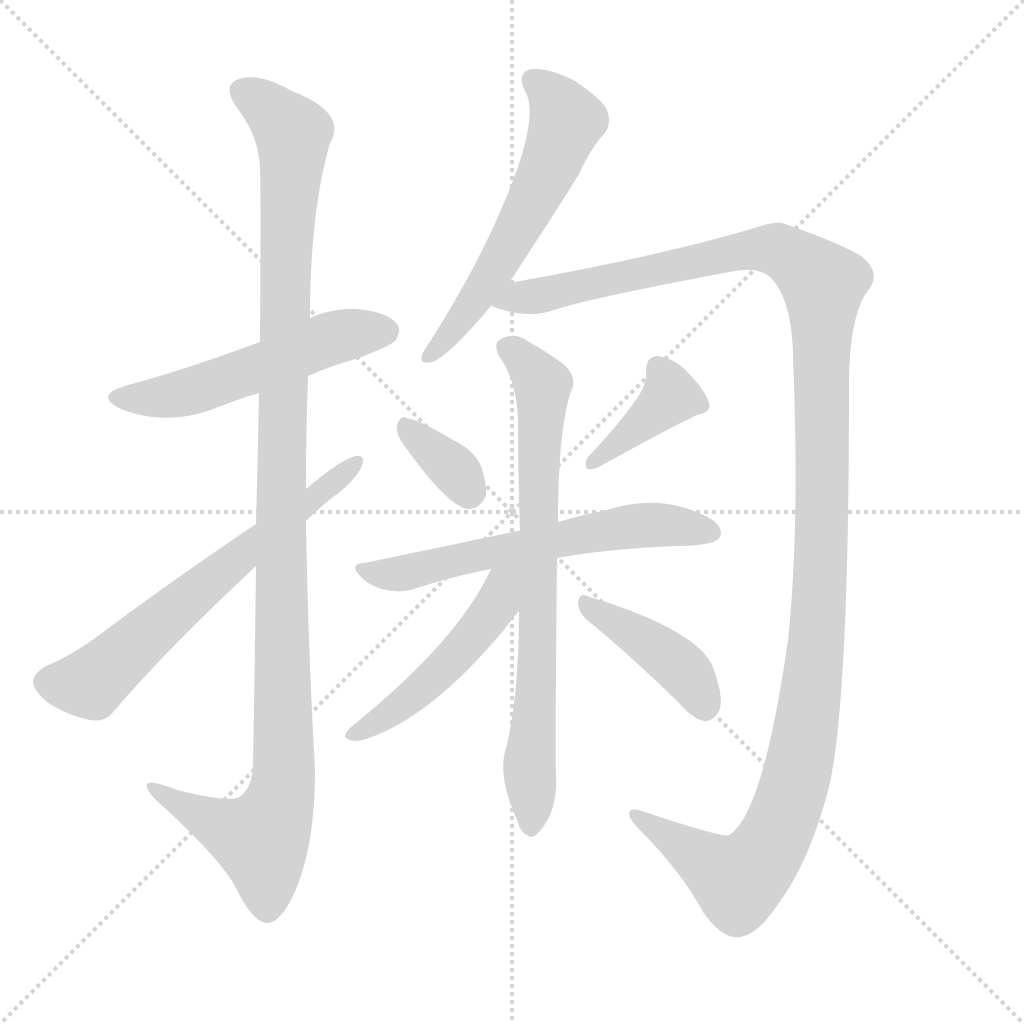
掬
Kangxi strokes: 12
Page 440, Entry 02
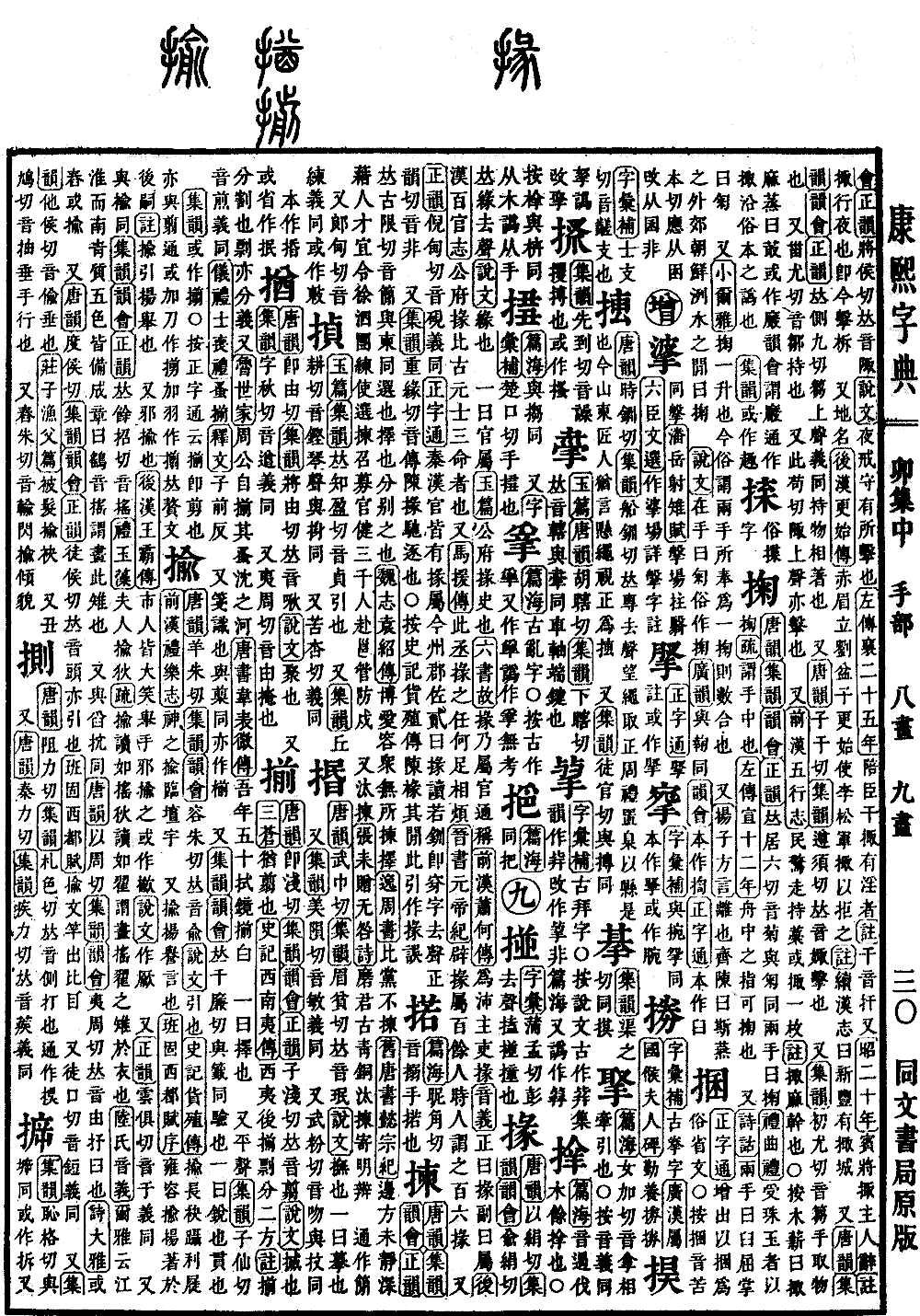
Tang Rhymes (Tangyun), Collected Rhymes (Jiyun), Rhyme Anthology (Yunhui), Correct Rhymes (Zhengyun): Pronounced ju. Same as the character represented by the component for gathering. To hold in both hands is called ju.
Book of Rites (Liji), Songs of Refinement (Quli): Those who receive pearls and jade do so by holding them in both hands. Commentary (Shu): This refers to what is in the hands.
Zuo Tradition (Zuo Zhuan), 12th year of Duke Xuan: The fingers in the boat could be held in both hands.
Also, Exegesis of the Classic of Poetry (Shi Gu): Holding in both hands is called jiu, and cupping the palms is called ju.
Also, Small Erya (Xiao Erya): A ju is one sheng. Today, the common people call what is held in both hands one ju, which is a measurement of several units.
Also, Master Yang's Dialects (Fangyan): To separate. In the state of Qi, it is called si. In the outer suburbs of Yan and between the Lie River of Joseon, it is called ju.
Exposition of Written Characters (Shuowen): To be in the hand is written as the character represented by the component for gathering. The common form is written as 掬.
Broad Rhymes (Guangyun): Same as the previously mentioned form.
Rhyme Anthology (Yunhui): Originally written as hong.
Correct Meaning Guide (Zhengzitong): Originally written as jiu.