Zi Collection, Page Position: Lower
Radical: Cliff (hǎn)
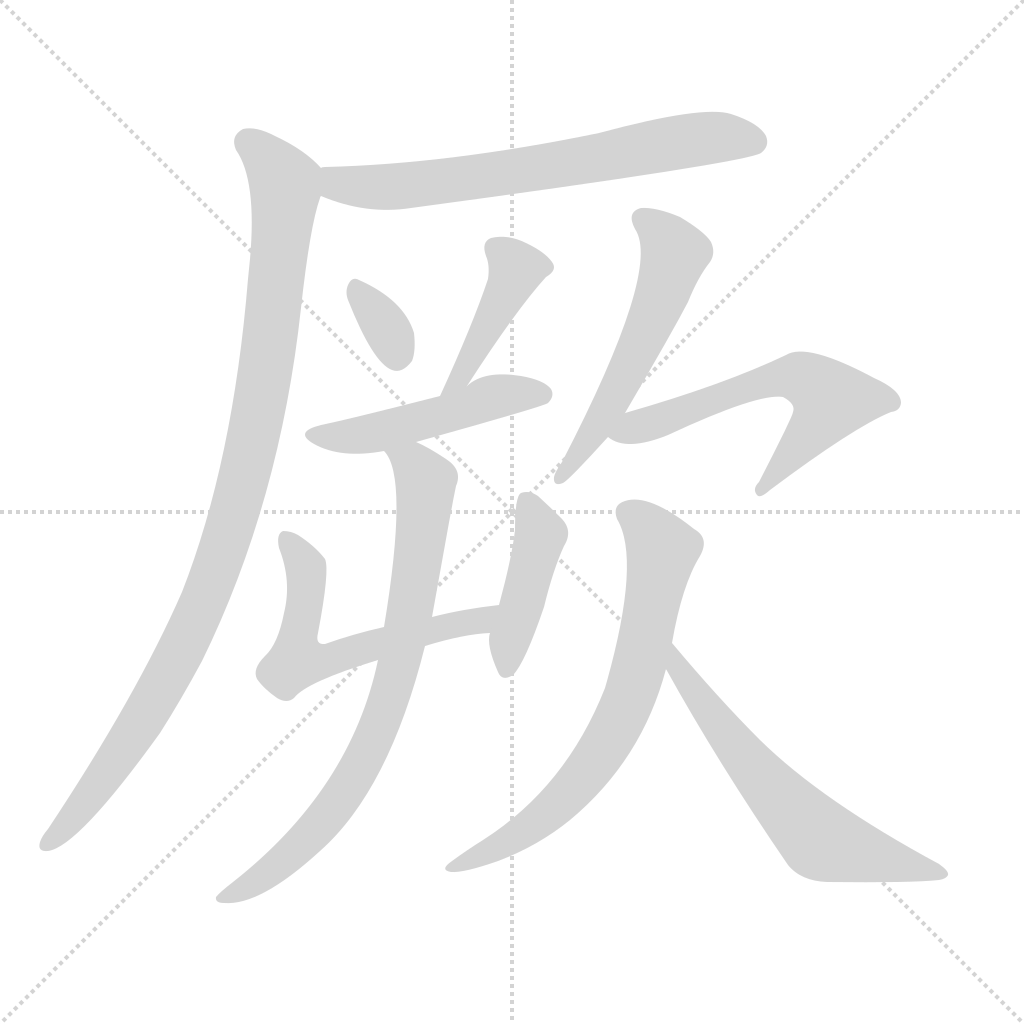
Character: jué
Kangxi Stroke Count: 12
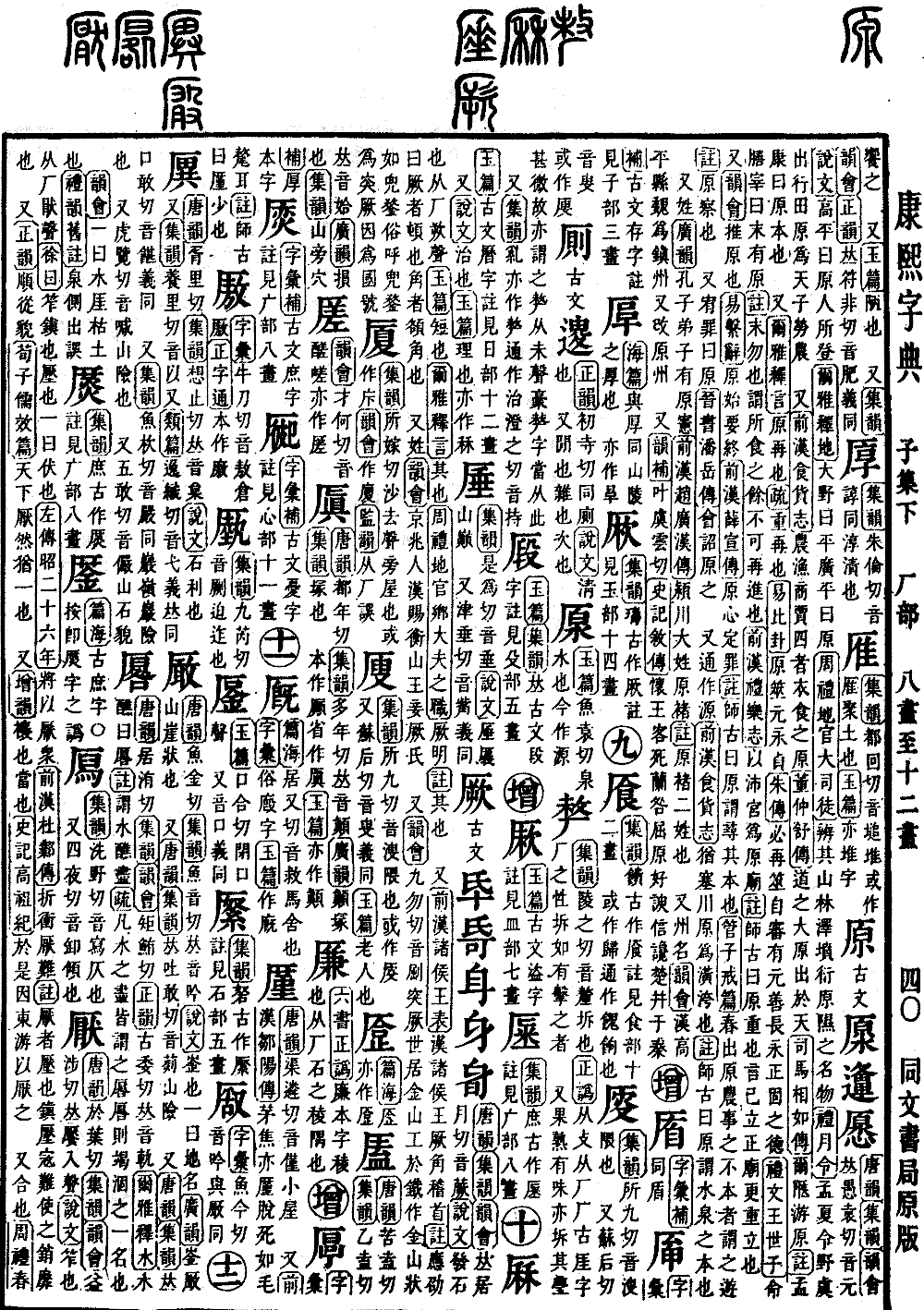
Page 162, Number 22
Ancient script form: jué. Can be found under the Clan (shì) radical section.
Pronounced according to the fanqie ju-yue, sounding like jué — Tang Rhymes (Tangyun), Collected Rhymes (Jiyun), and Rhyme Assembly (Yunhui).
To launch stones. Derived from Radical: Cliff (hǎn), with the character jué as the phonetic component — Explaining Graphs (Shuowen Jiezi).
Short — Jade Chapters (Yupian).
A pronoun meaning its, his, her, or their — Approaching the Correct (Erya).
The following morning — Rites of Zhou (Zhouli), Section on the Duties of the District Officials. Commentary: Means its.
The vassal kings of Han knocked their foreheads on the ground in salute — Book of Han (Hanshu), Table of Vassal Kings. Commentary by Ying Shao: Jué means to strike or kowtow; jiǎo means the corners of the forehead.
Also a surname — Rhyme Assembly. People from Jingzhao; the Han dynasty bestowed the surname Jué upon a concubine of the King of Hengshan.
Pronounced according to the fanqie jiu-wu, sounding like jué — Rhyme Assembly. The Tujue people lived for generations at the Jinshan Mountains and were skilled in ironworking. The Jinshan Mountains are shaped like a helmet. In their local customs, a helmet is called Tujue, and this was adopted as the name of their state.