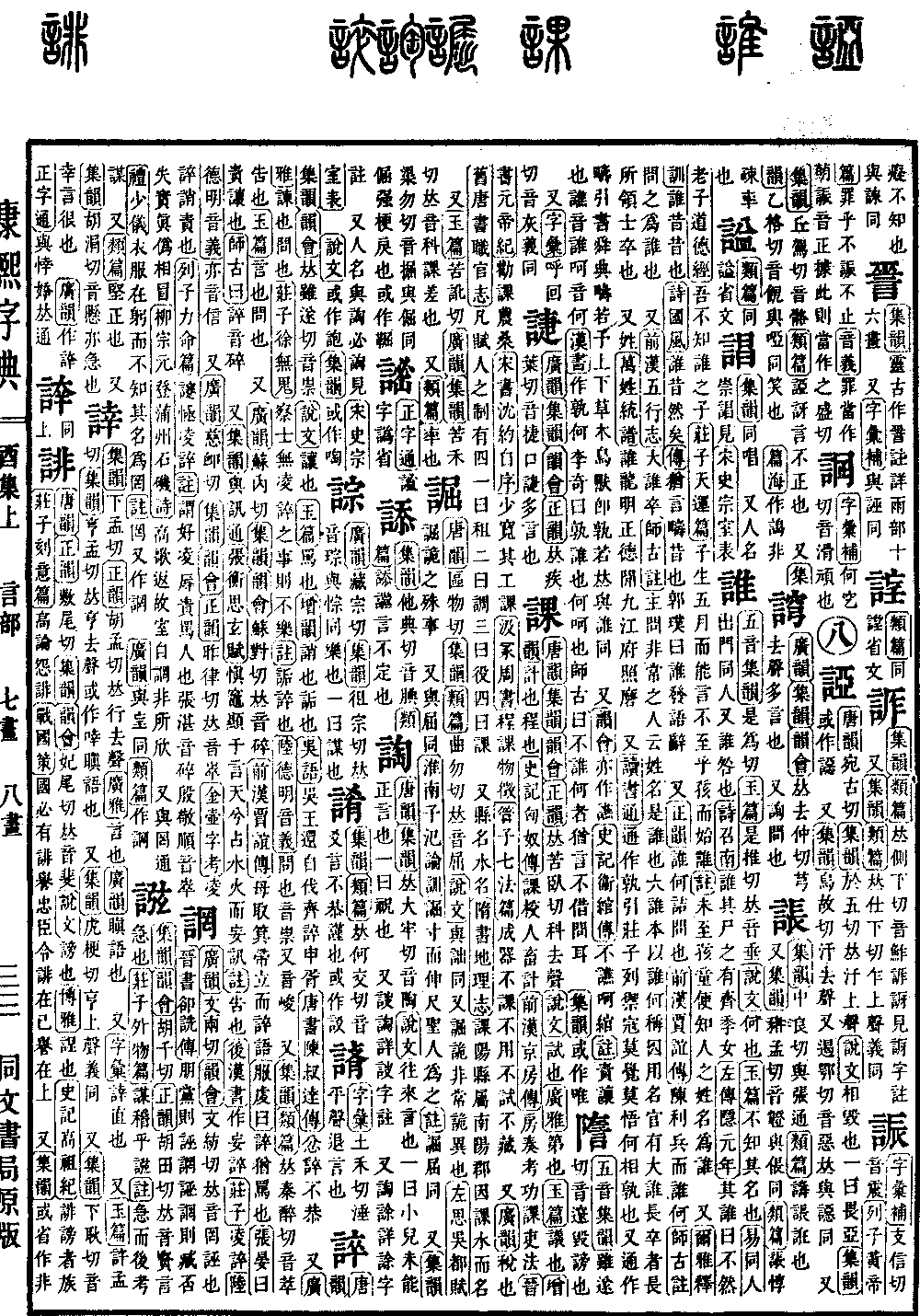
You Collection, Upper Volume
Radical: Speech (yán)
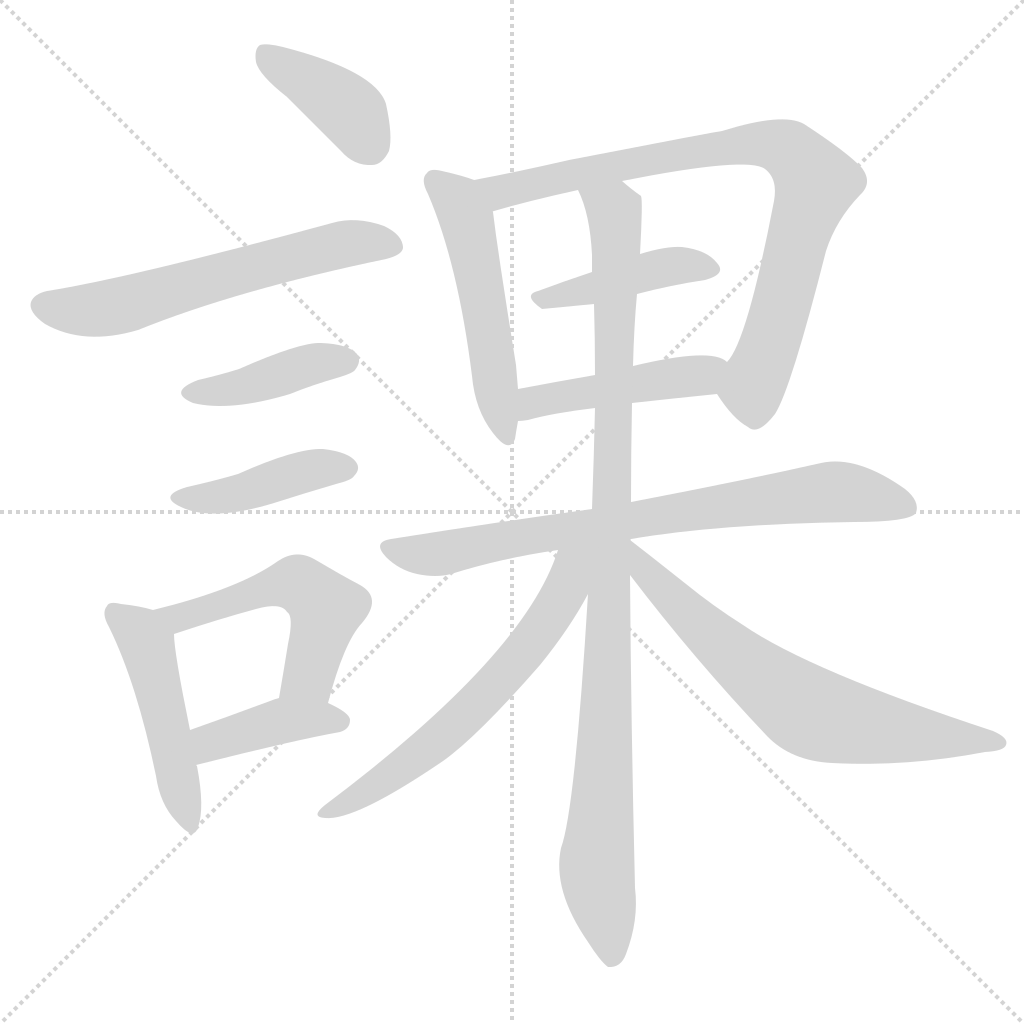
课
Kangxi strokes: 15
Page 1165, Entry 14
Tang Dynasty Rhymes (Tangyun), Collected Rhymes (Jiyun), Rhyme Compendium (Yunhui), Correct Rhymes (Zhengyun): Pronounced ke (falling tone).
Classic of Etymology (Shuowen): To test.
Broad Refinement (Guangya): To grade.
Jade Chapter (Yupian): To discuss.
Expanded Rhymes (Zengyun): To calculate, to schedule.
Records of the Grand Historian (Shiji), Account of the Xiongnu: To examine and calculate the number of people and livestock.
History of the Former Han (Qianhanshu), Biography of Jing Fang: Jing Fang presented regulations for examining and evaluating the administrative performance of officials.
Book of Jin (Jinshu), Annals of Emperor Yuan: To supervise and evaluate agricultural production.
Book of Song (Songshu), Self-Preface by Shen Yue: To slightly relax their work quotas.
Chronicles of the Jizhong Tomb (Jizhong Zhoushu): To establish quotas for the collection of goods.
Guanzi, Seven Methods: Tools that are manufactured are not used without assessment, and are not stored without inspection.
Broad Rhymes (Guangyun): Tax.
Old Book of Tang (Jiu Tangshu), Treatise on Officials: The systems for levying taxes were fourfold: first, land rent; second, household levies; third, corvee labor; fourth, assessed taxes.
Name of a county and a river.
Book of Sui (Suishu), Treatise on Geography: Keyang County, belonging to Nanyang Commandery, named after the Ke River.
Jade Chapter (Yupian): Pronounced ke.
Broad Rhymes (Guangyun), Collected Rhymes (Jiyun): Pronounced ke.
Meaning: To vary or differ.
Categorized Essays (Leipian): Rate or ratio.