Zi Collection, Page Position: Lower
Radical: Strength (lì)
Lè; Kangxi strokes: 11; Page number: 148, line 10
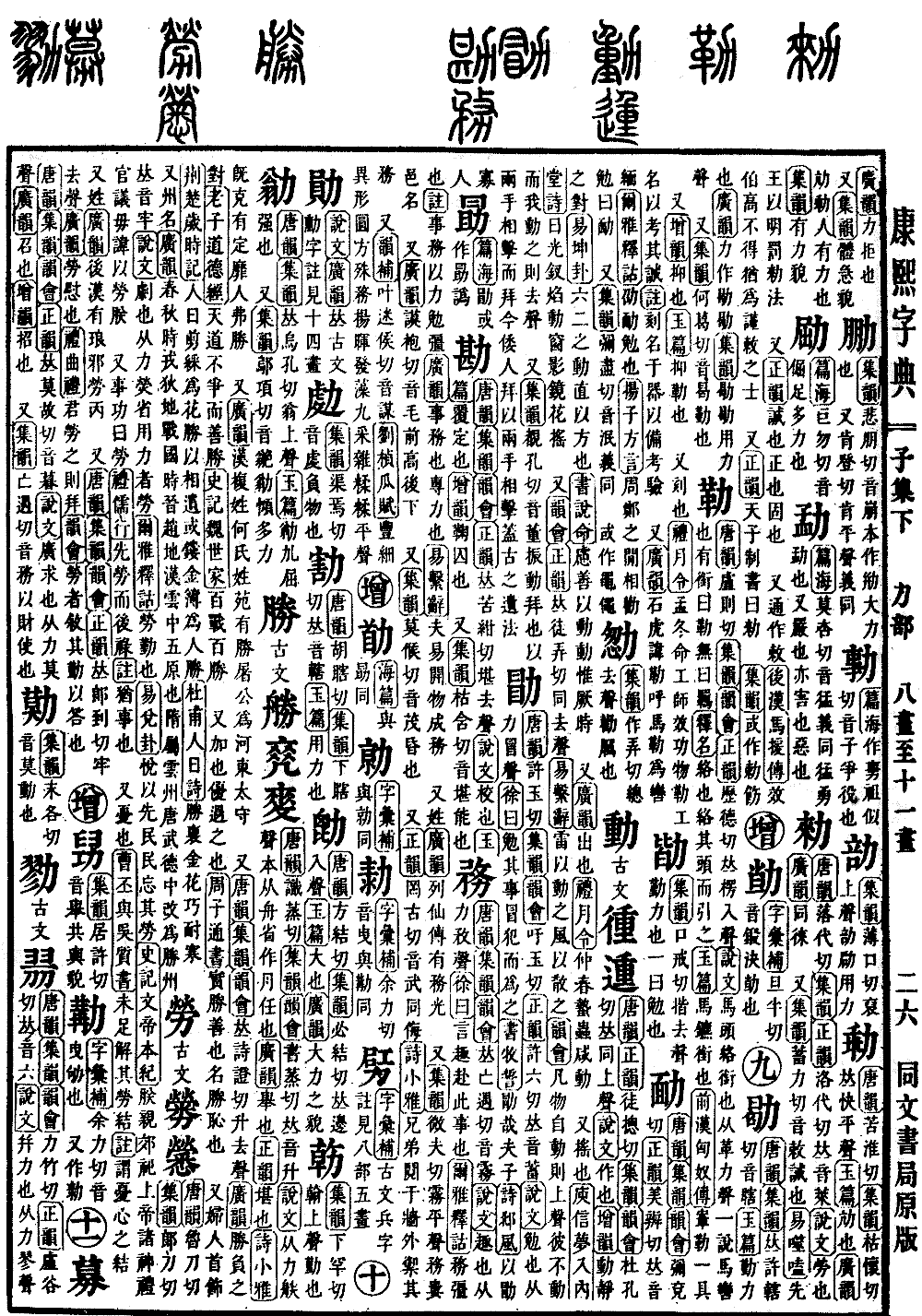
Tang Rhyme (Tángyùn): lú zé qiè. Jiyun (Jíyùn), Yunhui (Yùnhuì), Zhengyun (Zhèngyùn): lì dé qiè, pronounced with an entering tone (rù shēng) from the léng rhyme group.
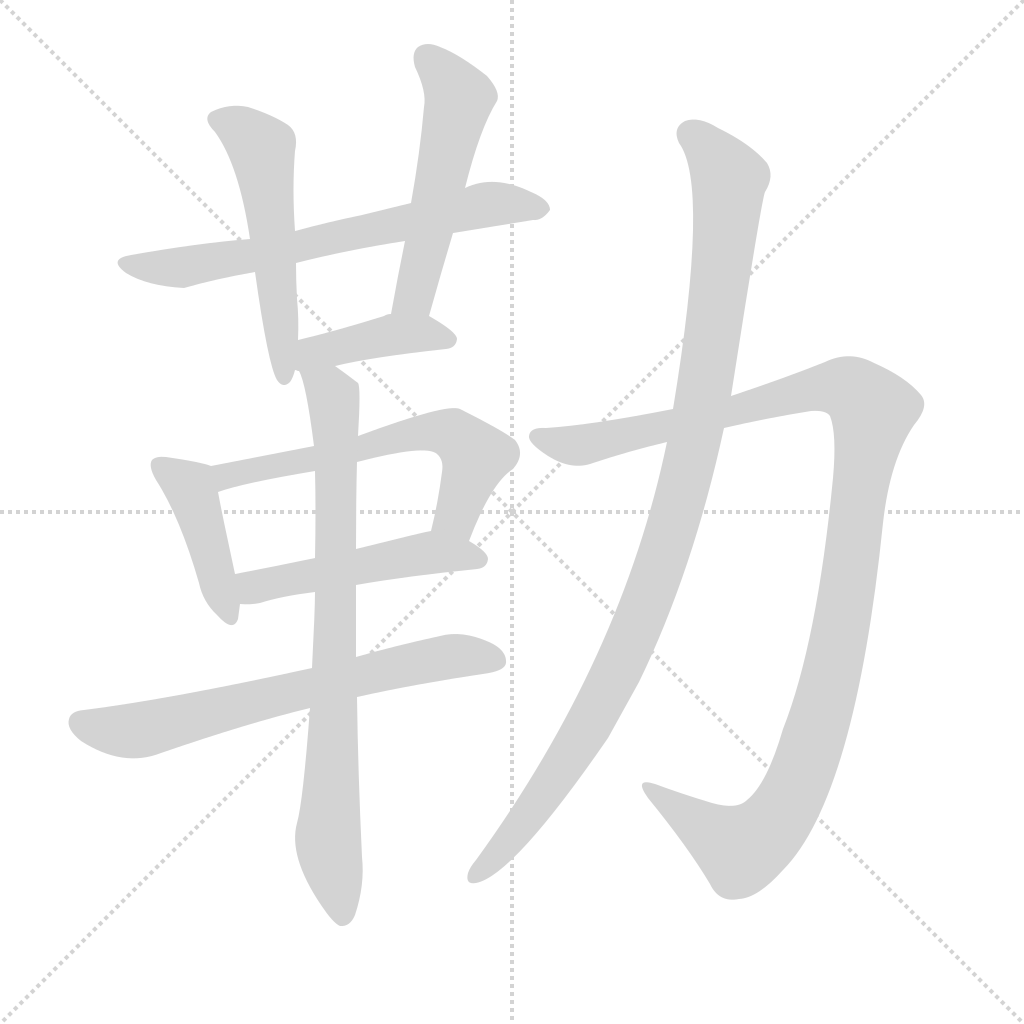
Shuowen Jiezi (Shuōwén Jiězì): "A bridle and bit for a horse's head." It is formed from the radical "革" (leather) and "力" (strength) as the phonetic component. Another explanation says it is a horse's reins; with a bit it is called lè, without it is called jī.
Shimíng (Shìmíng): "A rein. It encloses its head and pulls it."
Yupian (Yùpiān): "A horse's bit and bridle."
Book of Han (Hànshū), Account of the Xiongnu (Xiōngnú Zhuàn): "One set of saddle and bridle."
Also, Zengyun (Zēngyùn): "To restrain." Yupian: "To restrain is lè."
Also, "to engrave." Liji (Lǐjì), Monthly Ordinances (Yuèlìng): "In the first month of winter, the master craftsman is ordered to present his accomplishments. The names of the craftsmen are engraved on the objects to verify their sincerity." Note: "To engrave names on objects to be prepared for inspection."
Also, Guangyun (Guǎngyùn): Shí Hǔ (a historical figure) avoided the taboo name lè (his own name), so a horse bridle (mǎ lè) was referred to as pèi.