Wei Collection, Upper Volume
Radical: Rice (mǐ)
Kangxi stroke count: 11
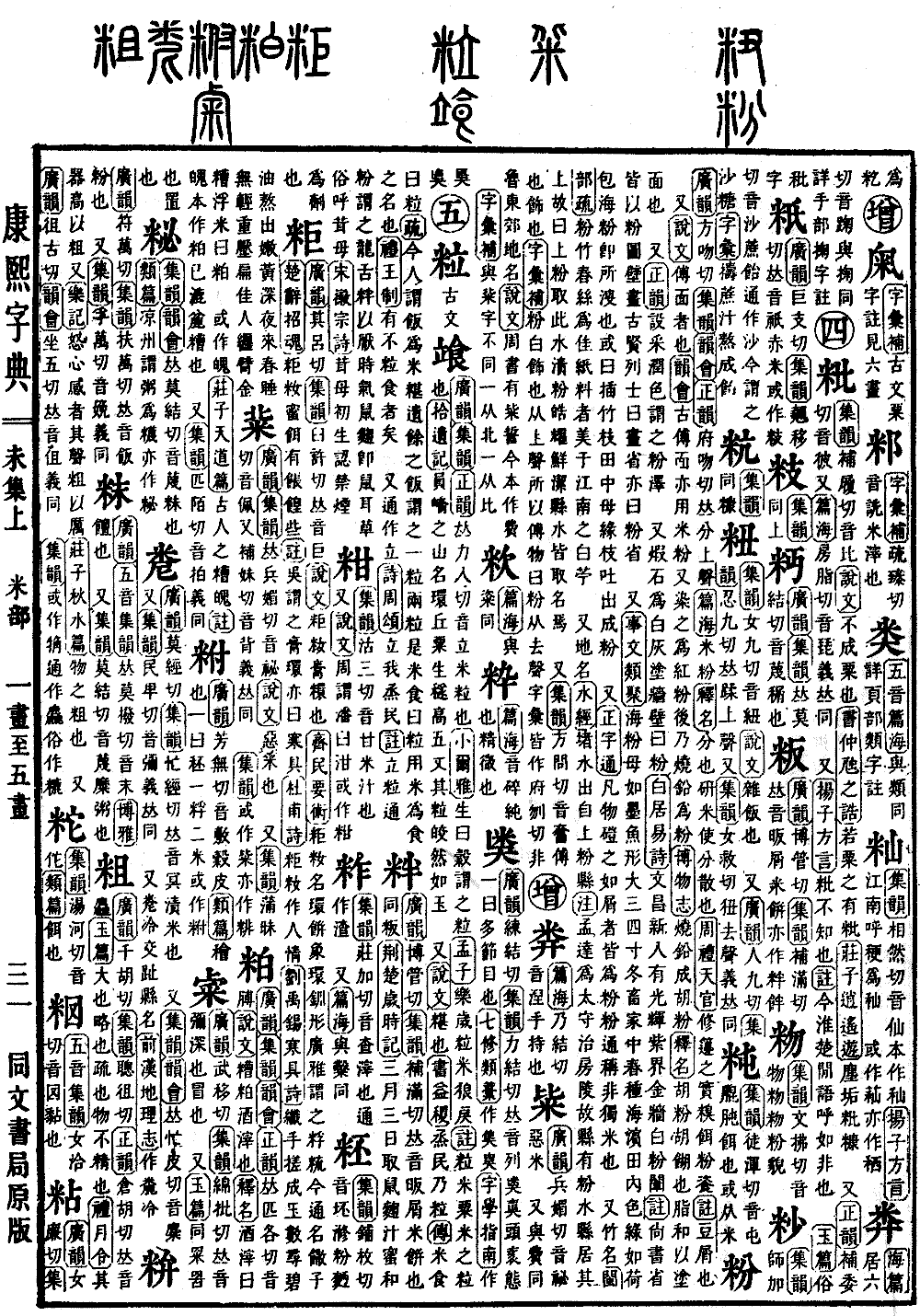
Page 907, Entry 22
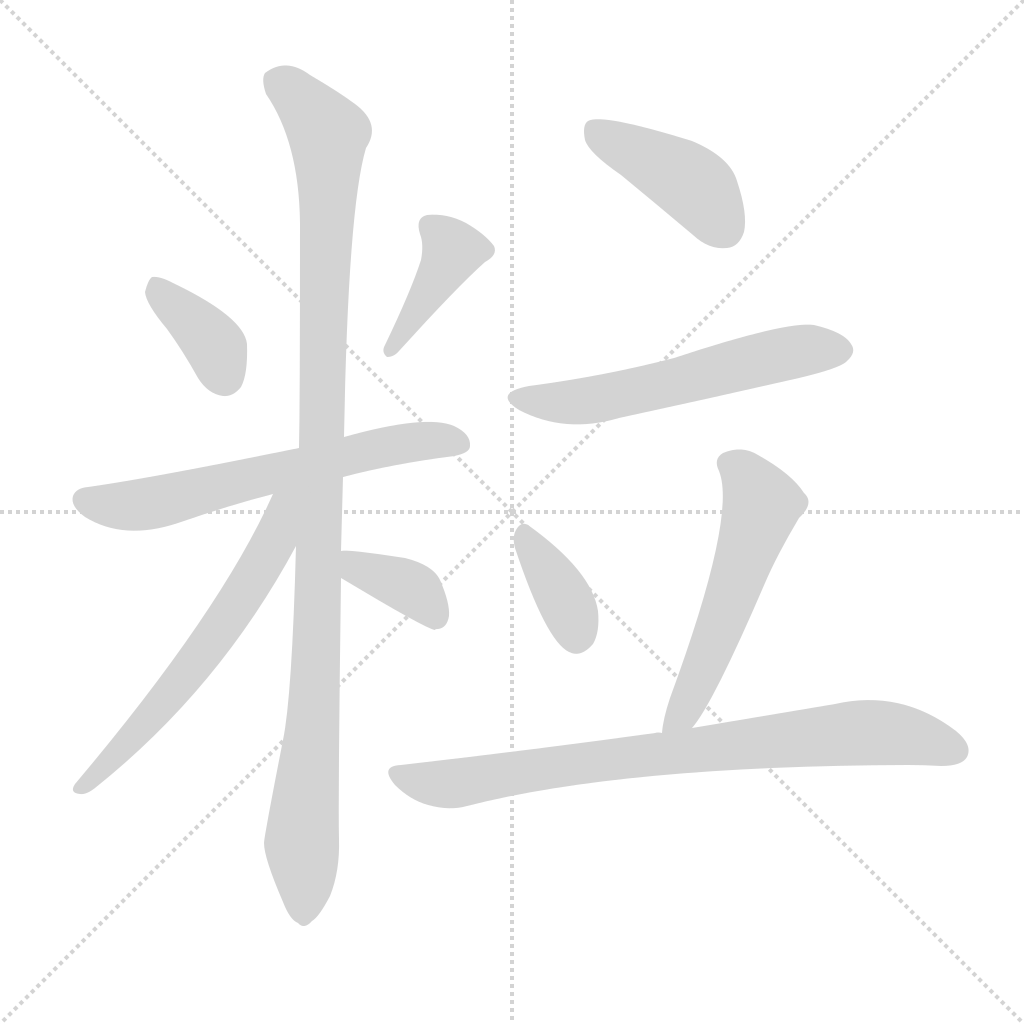
Ancient form. Guangyun (Guangyun) and Jiyun (Jiyun) and Zhengyun (Zhengyun) state the pronunciation is li (falling tone). The grains of rice.
Xiao Erya (Xiao Erya): Raw grain is called li.
Mencius (Mengzi): In a year of abundance, grain is piled up in heaps.
Annotation: Li rice refers to the individual grains of millet.
Shiyiji (Shiyiji): Yuanqiao Mountain is also known as Huanqiu; the ears of grain that grow there reach a height of five zhang, and their grains are as white as jade.
Also, Shuowen (Shuowen): Refers to grains of rice.
Book of Documents (Shangshu): The common people therefore had food to eat.
Commentary: To use rice as food is called li.
Sub-commentary: People today call cooked rice mi san. When referring to leftover rice, one says one grain or two grains; therefore, using rice as food is called li, which is the name for using rice as a sustenance.
Book of Rites (Liji): There are also those who do not rely on grain for food.
Also used interchangeably with li.
Book of Odes (Shijing): Nourishing all our common people.
Annotation: Li and li are interchangeable.