Chen Collection, Middle Volume
Radical: Tree (mù)
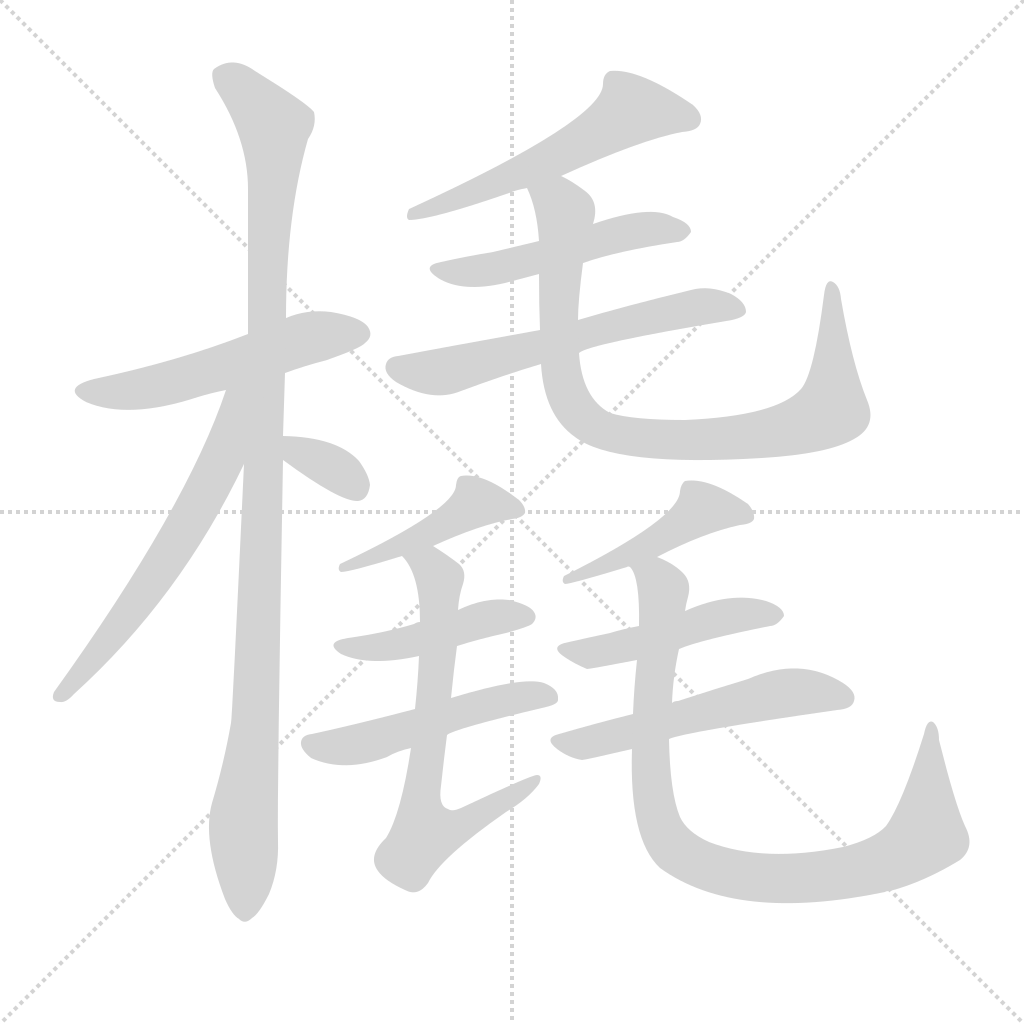
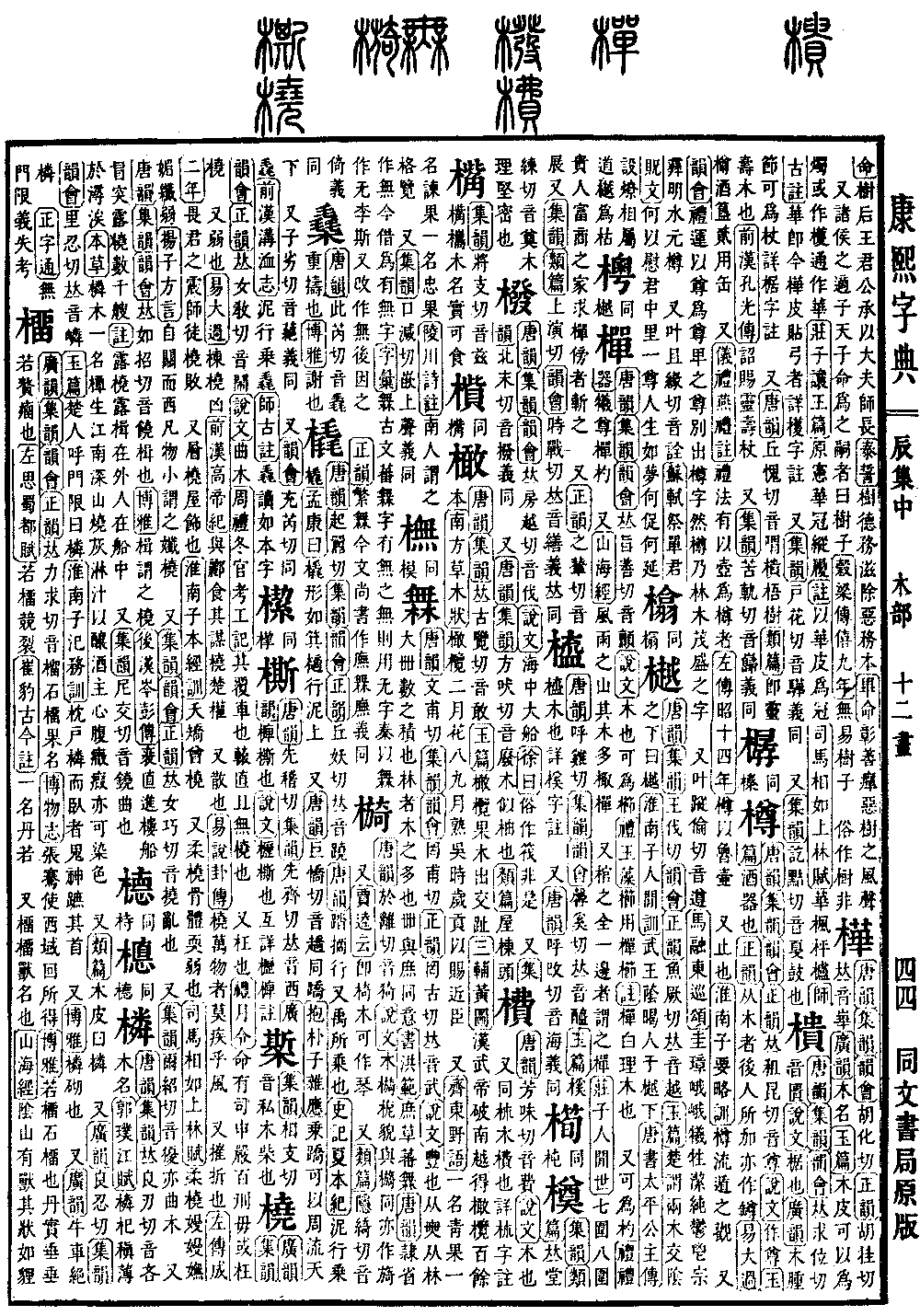
橇
Kangxi strokes: 16
Page 552, Entry 21
Tang Rhymes (Tangyun): Pronounced qiao (level tone).
Collected Rhymes (Jiyun), Rhyme Meetings (Yunhui), and Orthodox Rhymes (Zhengyun): Pronounced qiao (level tone).
Tang Rhymes (Tangyun): To walk by stepping on something. Also refers to a vehicle used by Yu.
Records of the Grand Historian (Shiji): To travel in mud using a qiao.
Meng Kang states: The qiao is shaped like a winnowing basket, used for traveling on mud.
Also Tang Rhymes (Tangyun): Pronounced qiao (rising tone).
The same as qiao.
Baopuzi: Riding a qiao allows one to travel throughout the world.
Also: Pronounced jue (rising tone).
Meaning is the same.
Also Rhyme Meetings (Yunhui): Pronounced cui (falling tone).
The same as cui.
History of the Former Han (Qianhan Shu): To travel in mud using a cui.
Shigu notes: Cui is read like the character itself.