Chen Collection, Upper Volume
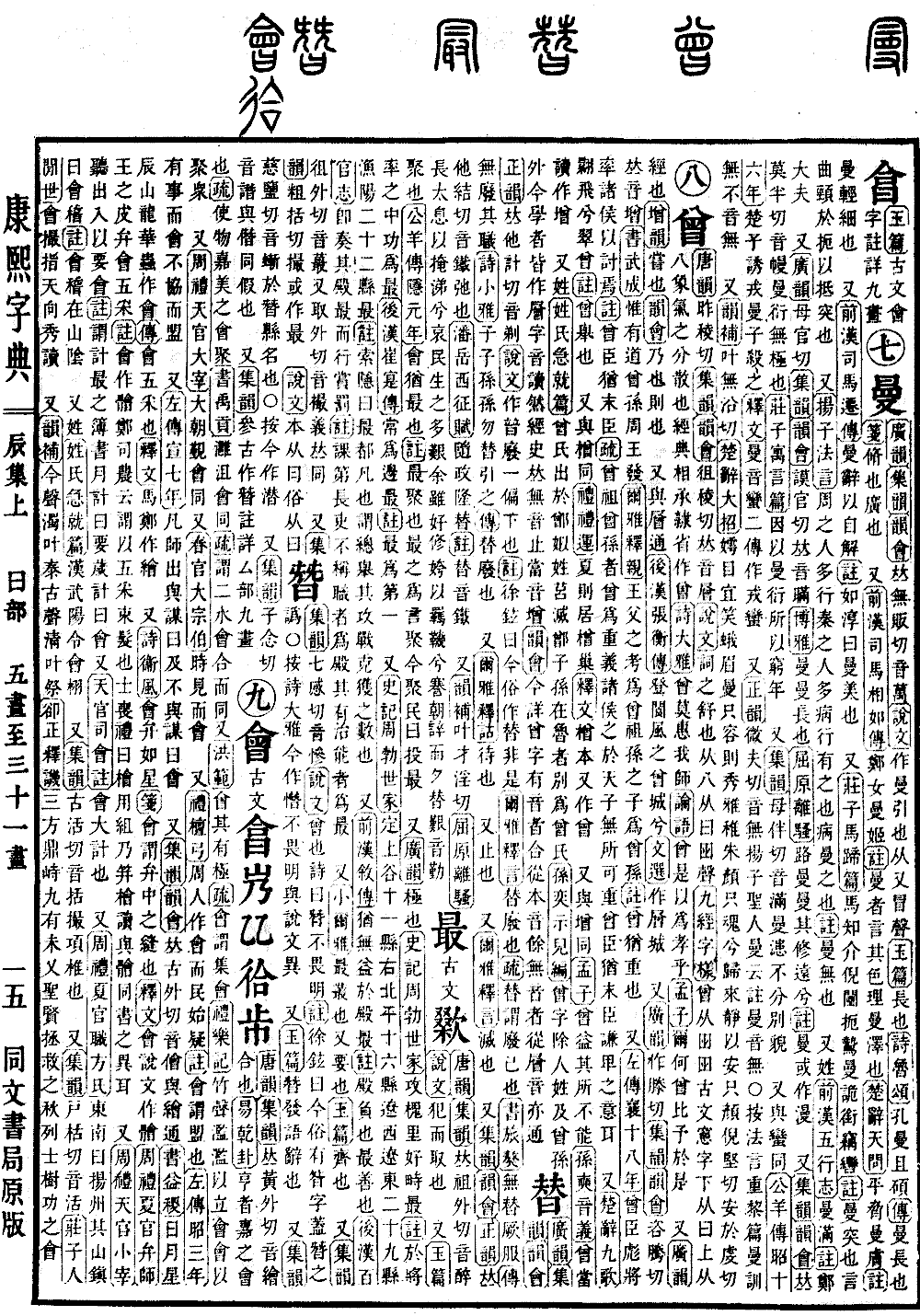
Radical: Say (yuē)
Kangxi Strokes: 12
Page 503, Entry 04
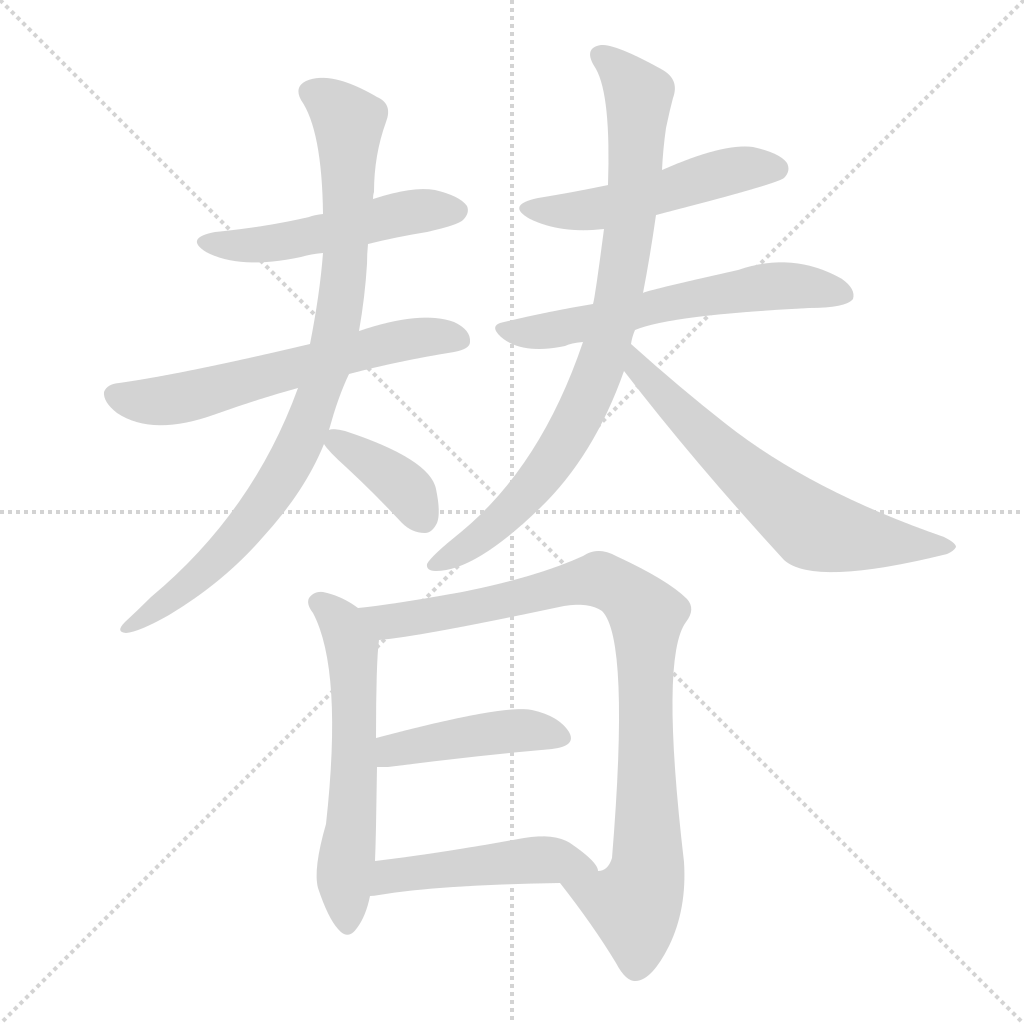
Guangyun (Guangyun), Jiyun (Jiyun), Yunhui (Yunhui), Zhengyun (Zhengyun): Pronounced ti. According to Shuowen (Shuowen), it is written as pu. It means to abandon one side and place it beneath. Note: Xu Xuan states that the current common character used for this is incorrect. Erya (Erya), Shiyan (Shiyan): ti means to abandon. Commentary: ti refers to abandoning oneself. Book of Documents (Shangshu), Lvao (Lv'ao): Do not abandon his duties. Commentary: Do not abandon his responsibilities. Book of Odes (Shijing), Xiaoya (Xiaoya): Children and grandchildren, do not abandon (the path) so that it may long continue. Commentary: ti means to abandon. Also, Erya (Erya), Shigou (Shigou): It means to wait. It also means to cease. Also, Erya (Erya), Shiyan (Shiyan): It means to be extinguished. Also, Jiyun (Jiyun), Yunhui (Yunhui), Zhengyun (Zhengyun): Pronounced tie. It means to be slack. Pan Yue, Xizheng Fu (Xizheng Fu): Following the rise and fall of political affairs. Note: ti, pronounced tie. Also, Yunbu (Yunbu): Rhymes with qin. Qu Yuan, Lisao (Lisao): I heave long sighs and wipe away tears, grieving for the people living in such calamities. Although I love purity and hold myself to high standards, I offer counsel in the morning and am abandoned by evening. Jian is pronounced qin.