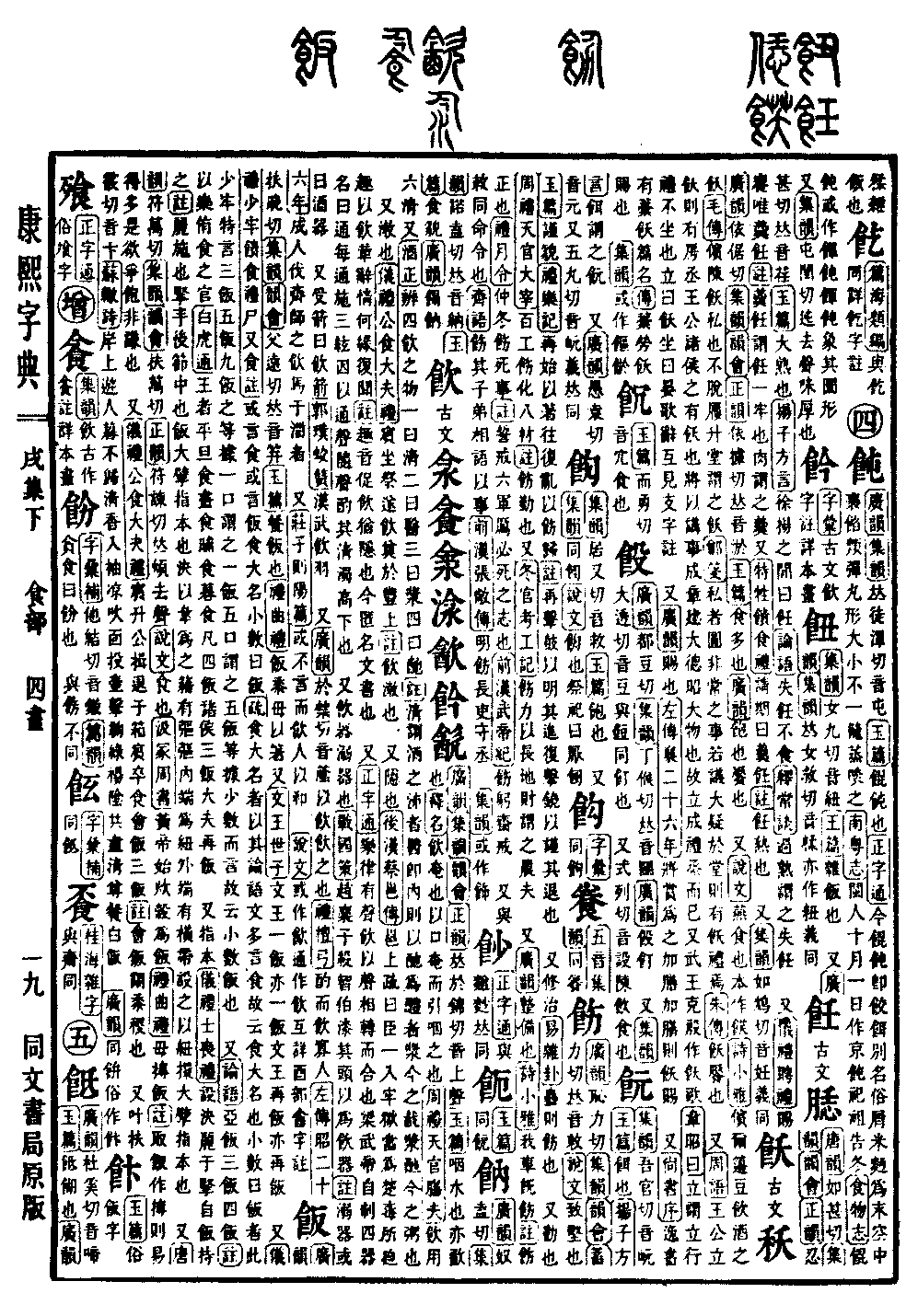
Xu Collection, Lower Volume
Radical: Eat (shí)
飩
Kangxi strokes: 13
Page 1417, Entry 02
Broad Rhymes (Guangyun) and Collected Rhymes (Jiyun): Pronounced tun.
Jade Chapters (Yupin): Refers to a dumpling.
Correct Meaning Treatise (Zhengzitong): Modern wontons are a variant name for dumplings. People grind rice or wheat into powder, wrap fillings inside, and shape them like pellets of varying sizes. They are consumed after being steamed in a bamboo steamer.
Southern Guangdong Records (Nanyuezhi): In Fujian, people make wontons on the first day of the tenth lunar month to offer sacrifices to ancestors and announce the arrival of winter.
Food Records (Shiwuzhi): Wonton is sometimes written in a variant form (hun). The term hun mimics its round appearance.
Also, Collected Rhymes (Jiyun): Pronounced zhun (falling tone). The meaning is a rich, dense flavor.