Hai Collection, Middle Volume
Radical: Bird (niǎo)
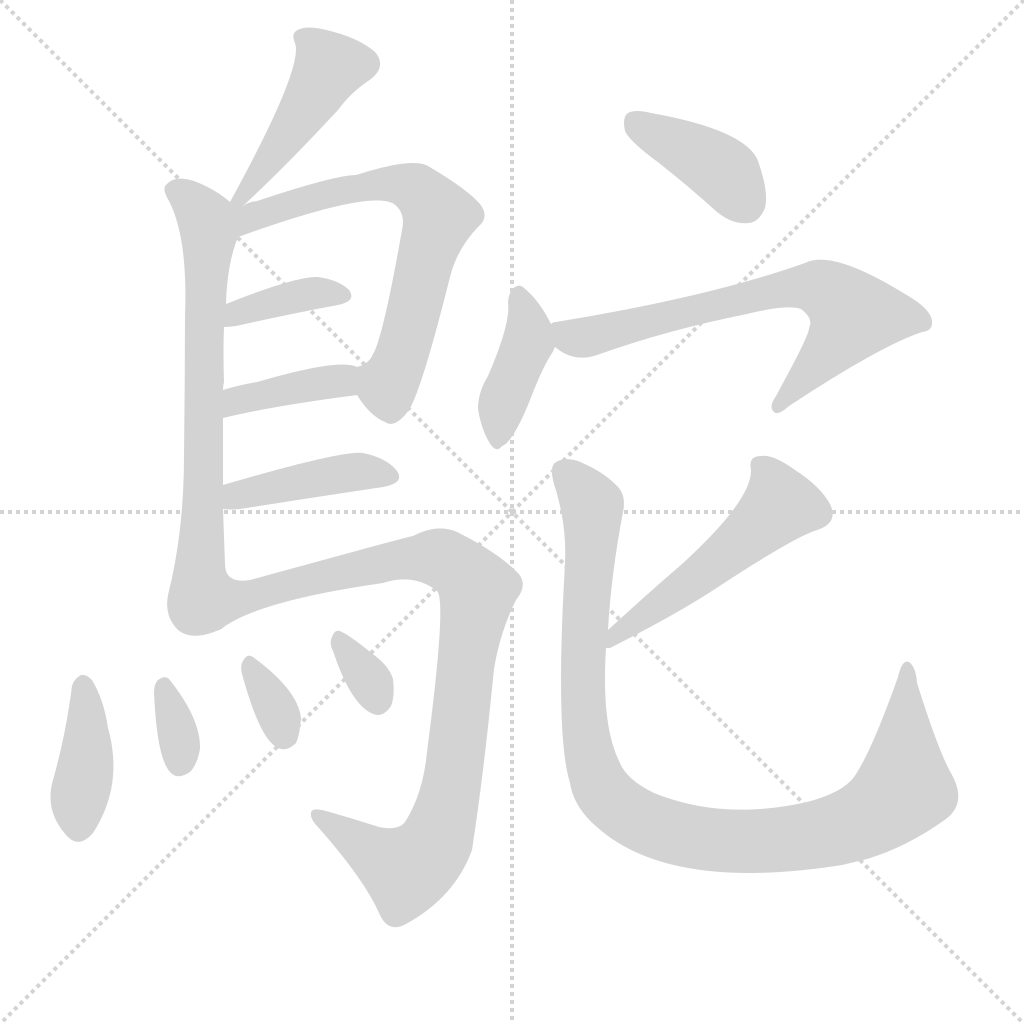
Ostrich (tuó)
Kangxi stroke count: 16
Page 1485, Entry 12
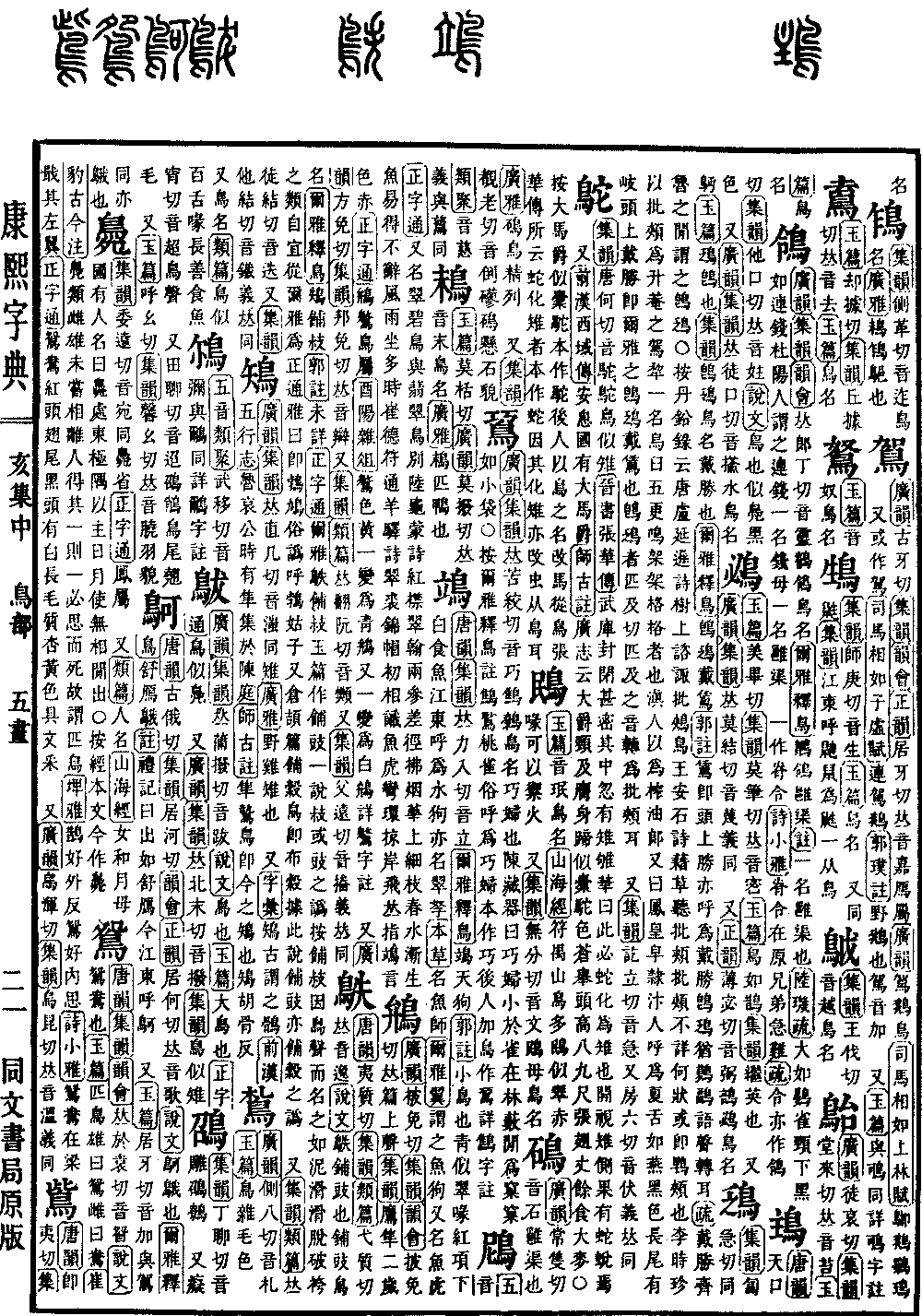
According to the Sound of Rhymes (Jiyun), pronounced tuó. The ostrich resembles a pheasant. In the History of the Jin Dynasty (Jinshu), Biography of Zhang Hua: The armory was tightly sealed, yet suddenly a pheasant was heard calling inside. Zhang Hua said, This must be a snake that has transformed into a pheasant. Upon opening it to look, beside the pheasant was indeed the shed skin of a snake.
Also, in the History of the Former Han Dynasty (Qianshujishiyuzhuan): The Parthian Empire possesses a type of large horse-sparrow. In the commentary by Yan Shigu, the Records of Various Things (Guangzhi) states: The large sparrow has a neck, chest, abdomen, body, and hooves resembling a camel. Its color is dark cyan, it stands eight or nine feet tall when it raises its head, and its wingspan is over ten feet long; it eats barley. Note that the large horse-sparrow resembles a camel. Originally written with the camel radical, later, because it is the name of a bird, the horse radical was changed to the bird radical. The snake turning into a pheasant mentioned in the Biography of Zhang Hua was originally written with the insect radical, but because it transformed into a pheasant, the insect radical was also changed to the bird radical.