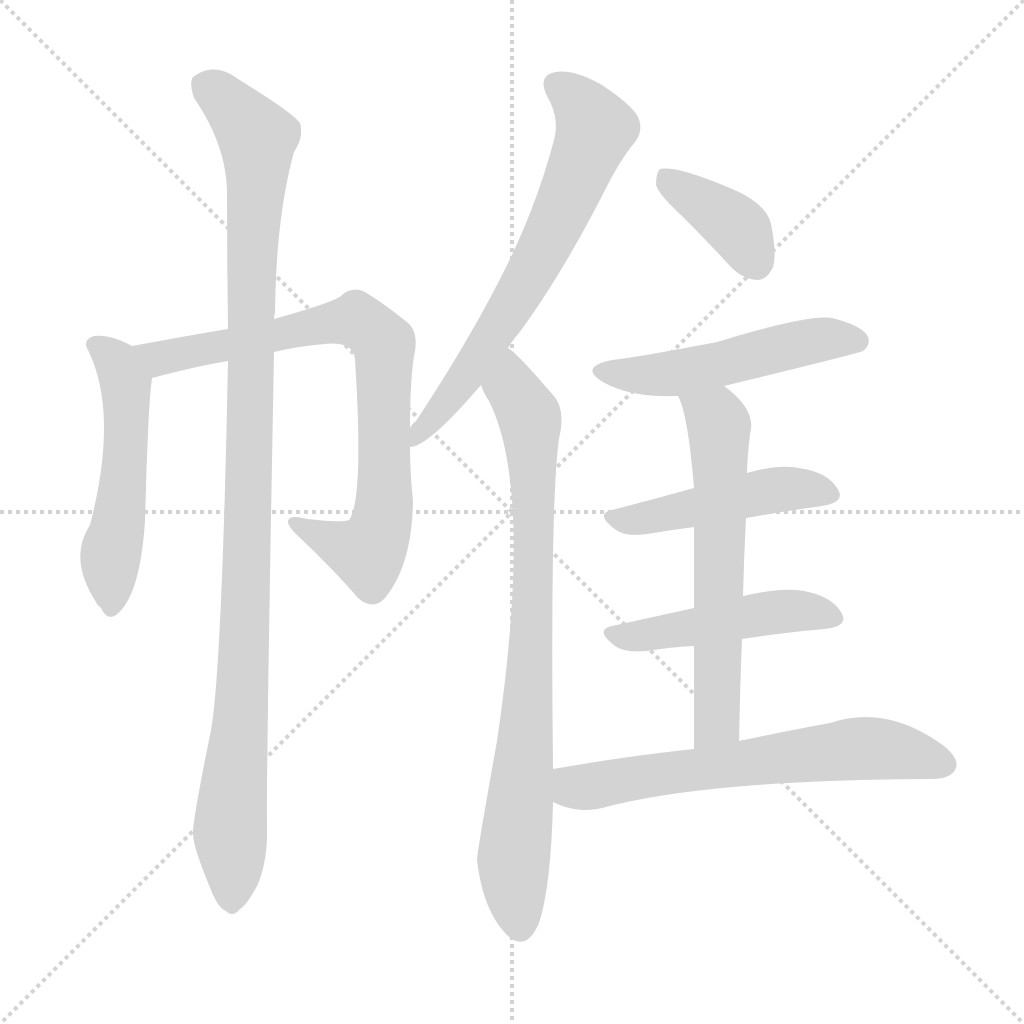
Yin Collection, Middle Volume. Radical: Cloth (jīn). Kangxi stroke count: 11. Page 333, Entry 10.
Ancient form. Pronounced wéi.
Jade Encyclopedia (Yupian): A screen or a curtain.
Collected Rhymes (Jiyun): A tent or covering.
Explanation of Names (Shiming): A curtain is a surrounding. It is that which is used to obstruct and enclose oneself.
Rites of Zhou (Zhouli): The Master of Curtains manages matters regarding curtains, screens, canopies, and banners. Note: Those placed at the sides are called curtains. In the Illustrations of the Three Rites (Sanli Tu), those at the four sides and above are called curtains.
Also: An official manages the setting up of curtain palaces and arranges banner gates. Note: To stretch out curtains to form a palace.
Also: A curtain skirt.
Analects of Confucius (Lunyu): If it is not a curtain skirt, one must taper it. Commentary: This refers to the skirt worn at the bottom. Regarding its construction, it is a full width of fabric like a curtain, so it is called a curtain skirt, and it is not tapered or sewn.
Also: A carriage curtain.
Book of Odes (Shijing), Odes of Wei: Drenching the carriage and the curtain skirt. Commentary: The curtain skirt is a decorative covering for the carriage. Commentary: The appearance is referred to as a carriage screen. In the region east of the mountains, it is called a skirt curtain. Also, it is a child’s ornament used to screen the side of a carriage, like a skirt used for decorative embellishment; therefore, it is sometimes called a screen skirt or a child’s ornament.