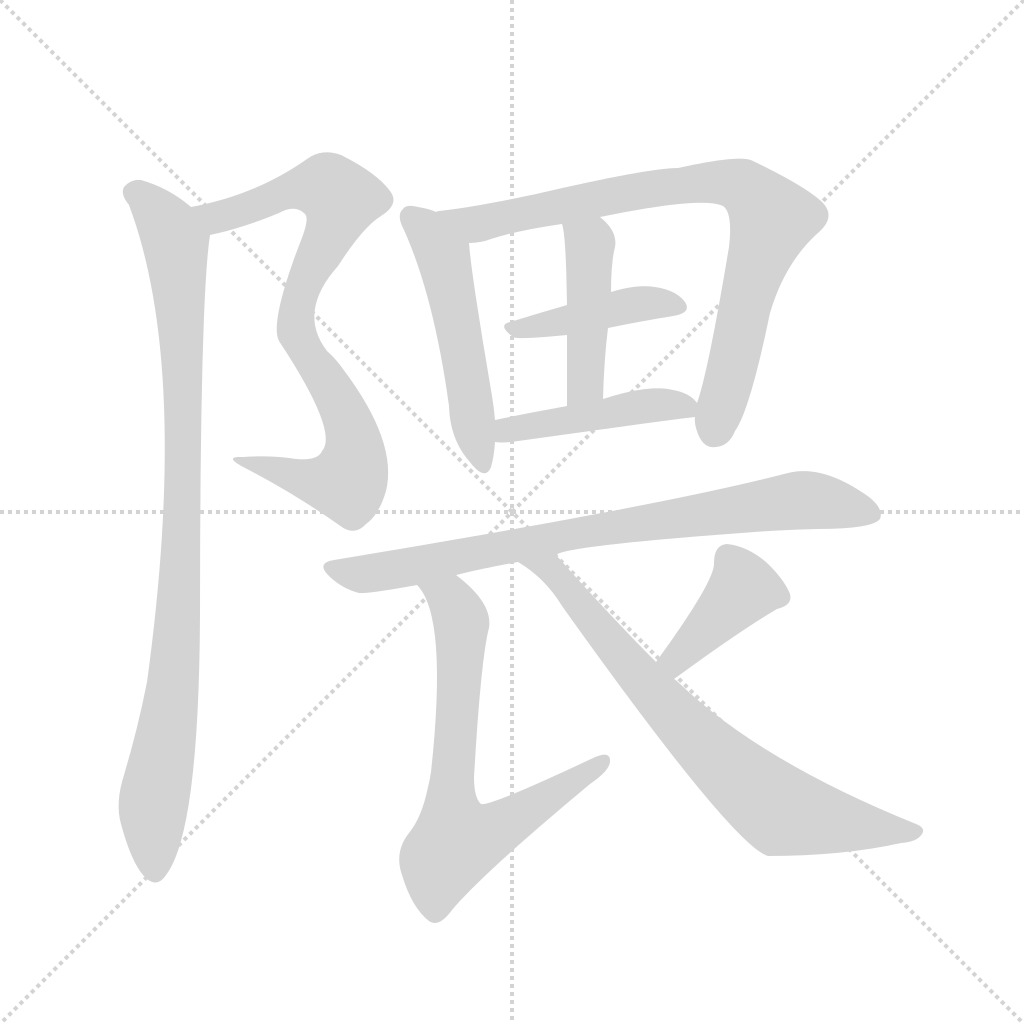
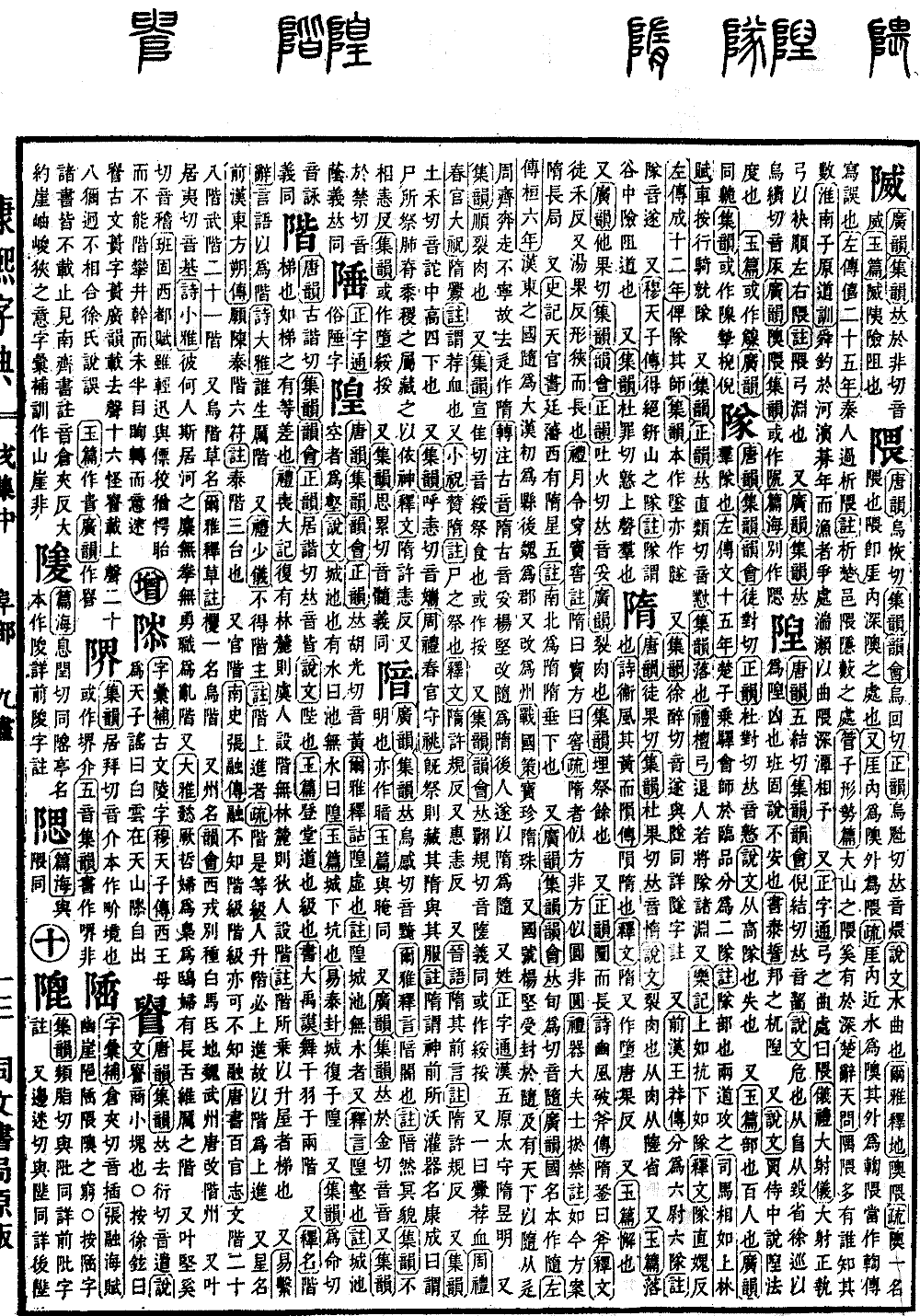
Xu Collection, Middle Volume
Radical: Mound (fù)
Kangxi Strokes: 17; Page Number: 1357, Entry 02
According to Tangyun, Jiyun, Yunhui, and Zhengshi, pronounced 'wēi'.
Shuowen Jiezi (Shuōwén Jiězì) defines it as a place where water flows in bends.
Erya (Ěryǎ), Explanation of Landforms, explains 'ào' as 'wēi'.
Commentary (shū): 'ào' is also called 'wēi'. 'Wēi' refers to a deep, concave, hidden place within a cliff.
Also: The part of a cliff close to water is called 'ào', and the part outside is called 'wēi'.
Commentary (shū): The part of a cliff close to water is 'ào', and the part outside is 'hōng' (a topographical term). Here, 'wēi' should be 'hōng', which is a scribal error.
Zuo Commentary (Zuǒzhuàn), Duke Xi 25th Year: "The people of Qin passed through the wēi of Xi."
Note: Xi was a city of Chu. 'Wēi' refers to a hidden place with dense vegetation.
Guanzi (Guǎnzǐ), Chapter on Formations and Circumstances: "How deep can the bends of great mountains be?"
Songs of Chu (Chǔcí), Heavenly Questions: "There are so many corners and bends, who knows their number?"
Huainanzi (Huáinánzǐ), Original Dao Training: "Shun fished by the river for a full year, and the fishermen competed for the rapids and shallow shoals, ceding the winding deep waters to him."
Also, Zhengzitong (Zhèngzìtōng): The curved part of a bow is called 'wēi'.
Book of Etiquette and Rites (Yílǐ), Grand Archery Ceremony: "The chief official for the grand archery holds the bow and wipes the left and right curved parts of the bow with his sleeve."
Note: 'Wēi' refers to the curved part of a bow.
Also, according to Guangyun (Guǎngyùn) and Jiyun (Jíyùn), pronounced 'wū huì qiè'. This pronunciation is associated with the character 'kuī' (a variant form).
Guangyun (Guǎngyùn): Refers to 'ào wēi'.
Jiyun (Jíyùn): Sometimes written as 'kuī' (a variant character).
Pianhai (Piānhǎi): Also written in other forms.