Yin Collection, Middle Volume
Radical: Turban (jīn)
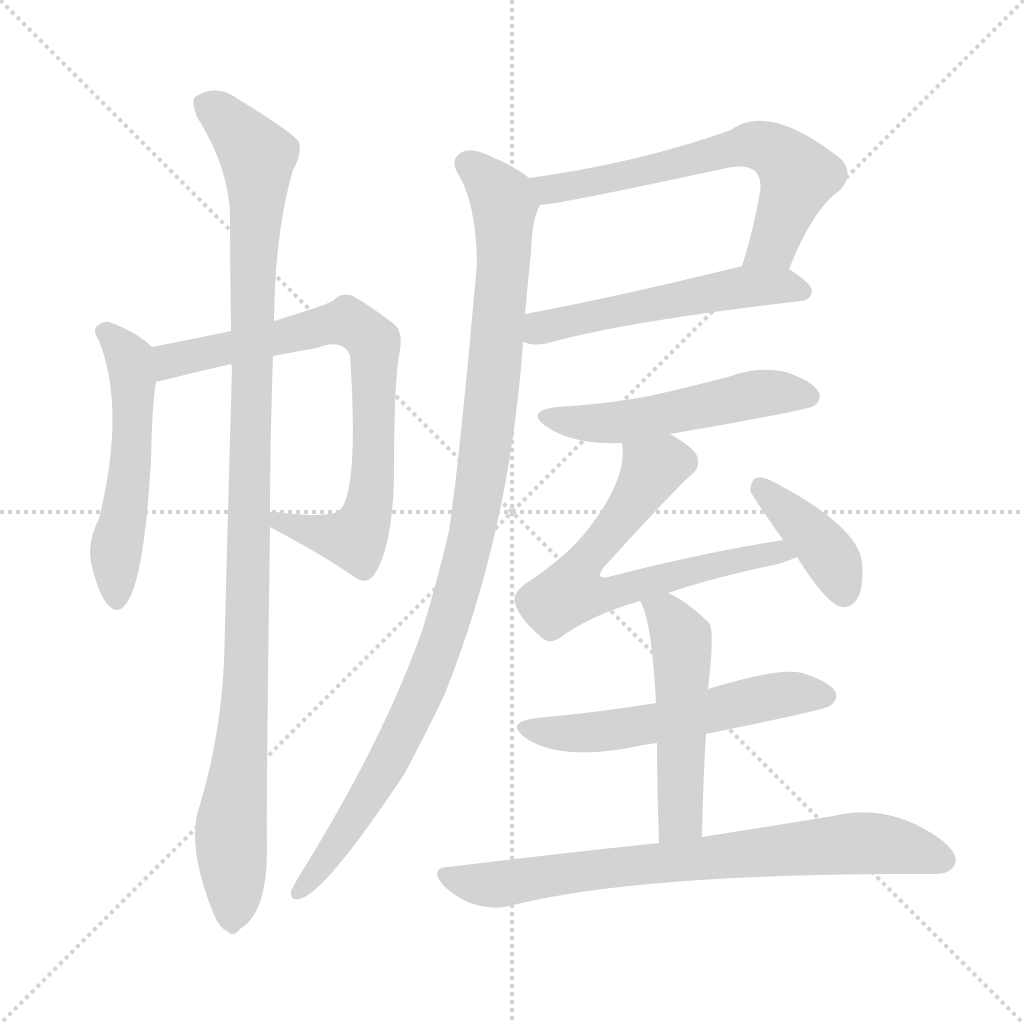
幄
Kangxi strokes: 12
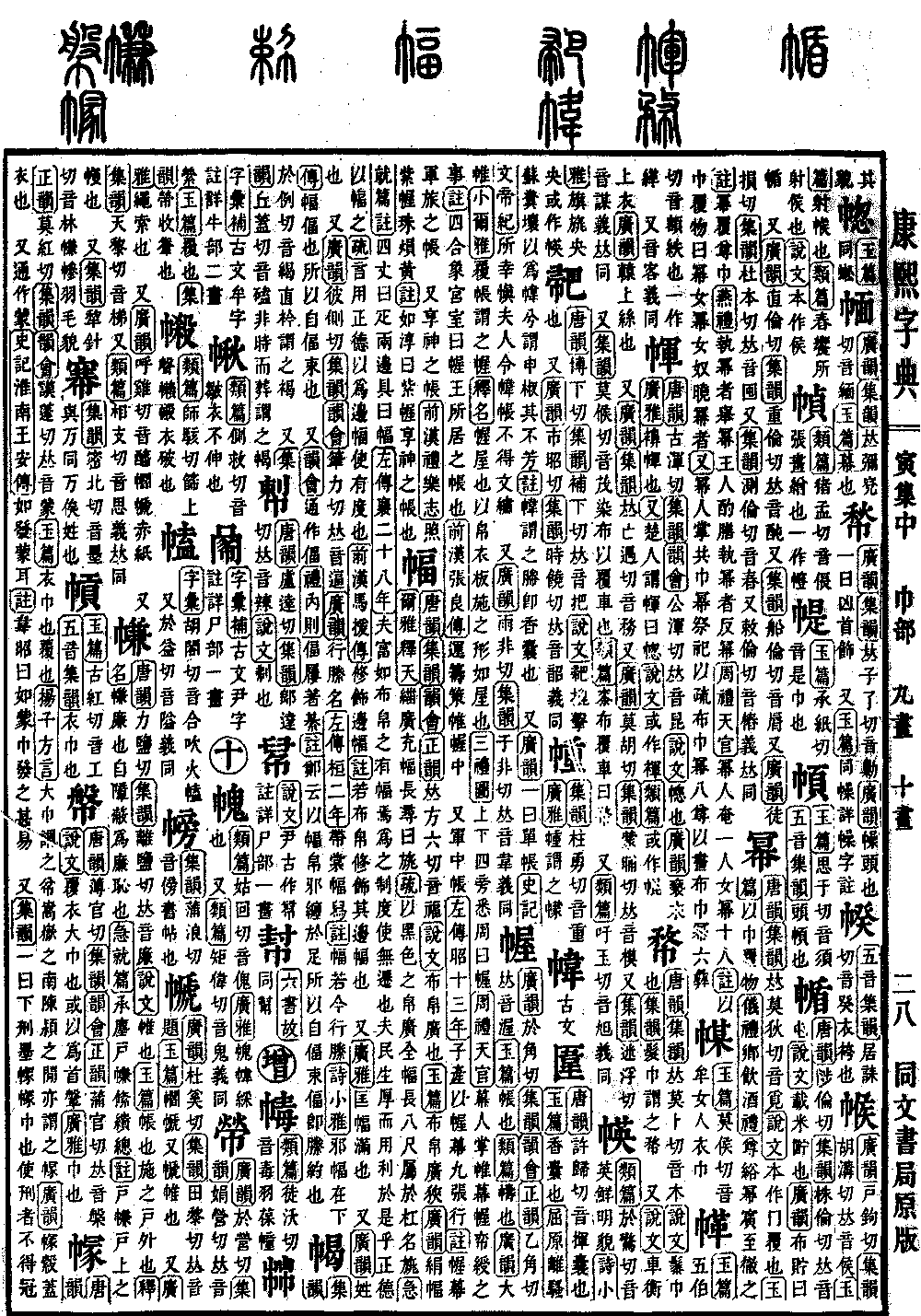
Page 334, Entry 20
Broad Rhymes (Guangyun): Pronounced wo
Collected Rhymes (Jiyun), Rhymes Compilation (Yunhui), Correct Rhymes (Zhengyun): Pronounced wo
Jade Chapters (Yupian): A curtain or tent.
Categorized Chapters (Leipian): A canopy.
Broad Rhymes (Guangyun): A large curtain.
Minor Approaches to Definitions (Xiao Erya): A covered tent is called a wo.
Explanation of Names (Shiming): Wo means house. It is made by covering wooden boards with silk, shaped like a house.
Illustrations of the Three Rituals (Sanli Tu): A covering that is enclosed on all sides, top and bottom, is called a wo.
Rites of Zhou (Zhouli), Office of the Celestial Bureaucrat: The curtain-keeper is in charge of screens, curtains, tents, canopies, and tassels.
Commentary: A structure closed on four sides that resembles a palace is called a wo, which is the tent where the king resides.
History of the Former Han (Qian Hanshu), Biography of Zhang Liang: To plan strategies within the command tent.
Also, a military tent.
Zuo Tradition (Zuo Zhuan), Year 13 of Duke Zhao: Zichan traveled with nine tent curtains.
Commentary: Tent curtains are tents used for military campaigns.
Also, a tent for offering sacrifices to spirits.
History of the Former Han (Qian Hanshu), Treatise on Ritual and Music: Illuminating the purple tent, with yellow decorations and pearls.
Commentary: Ru Chun states: The purple tent is a tent used for offering sacrifices to spirits.