Hai Collection, Lower Volume
Radical: Bird (niǎo)
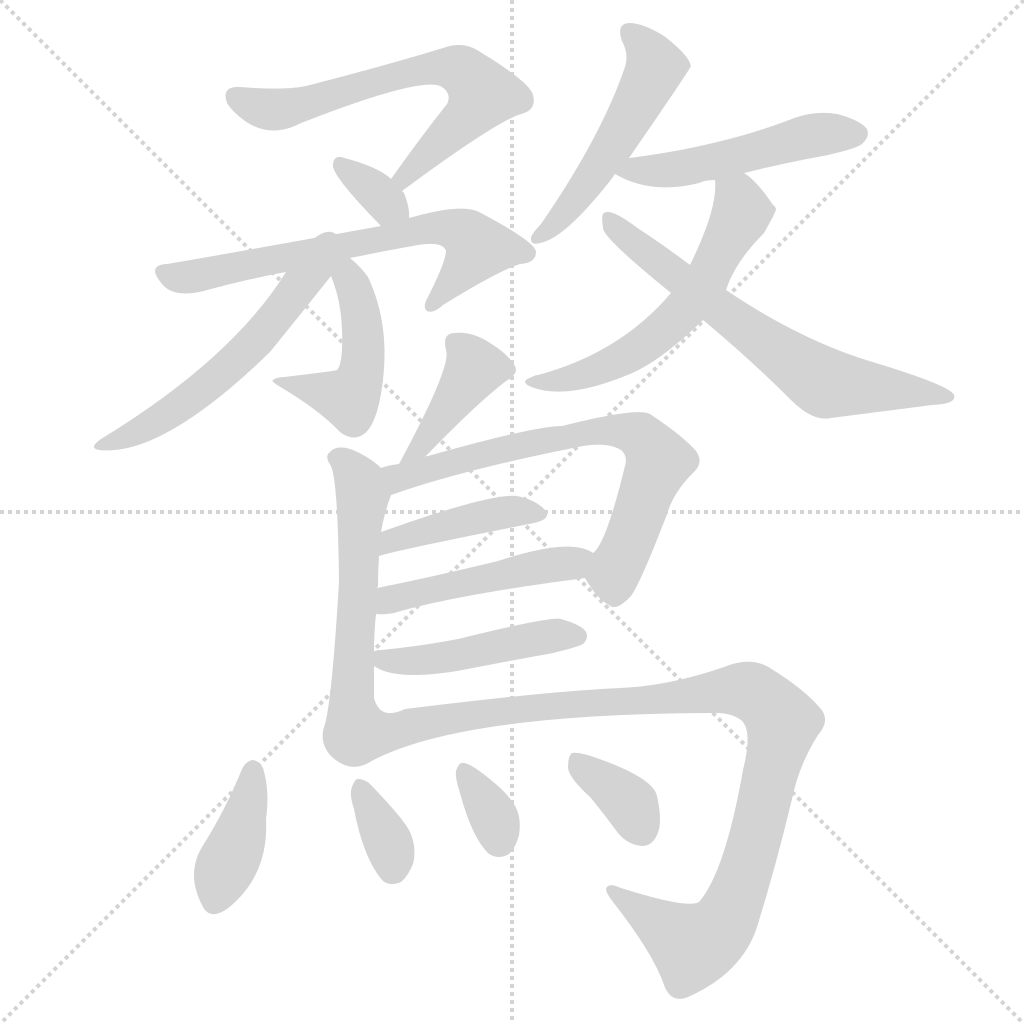
Wù
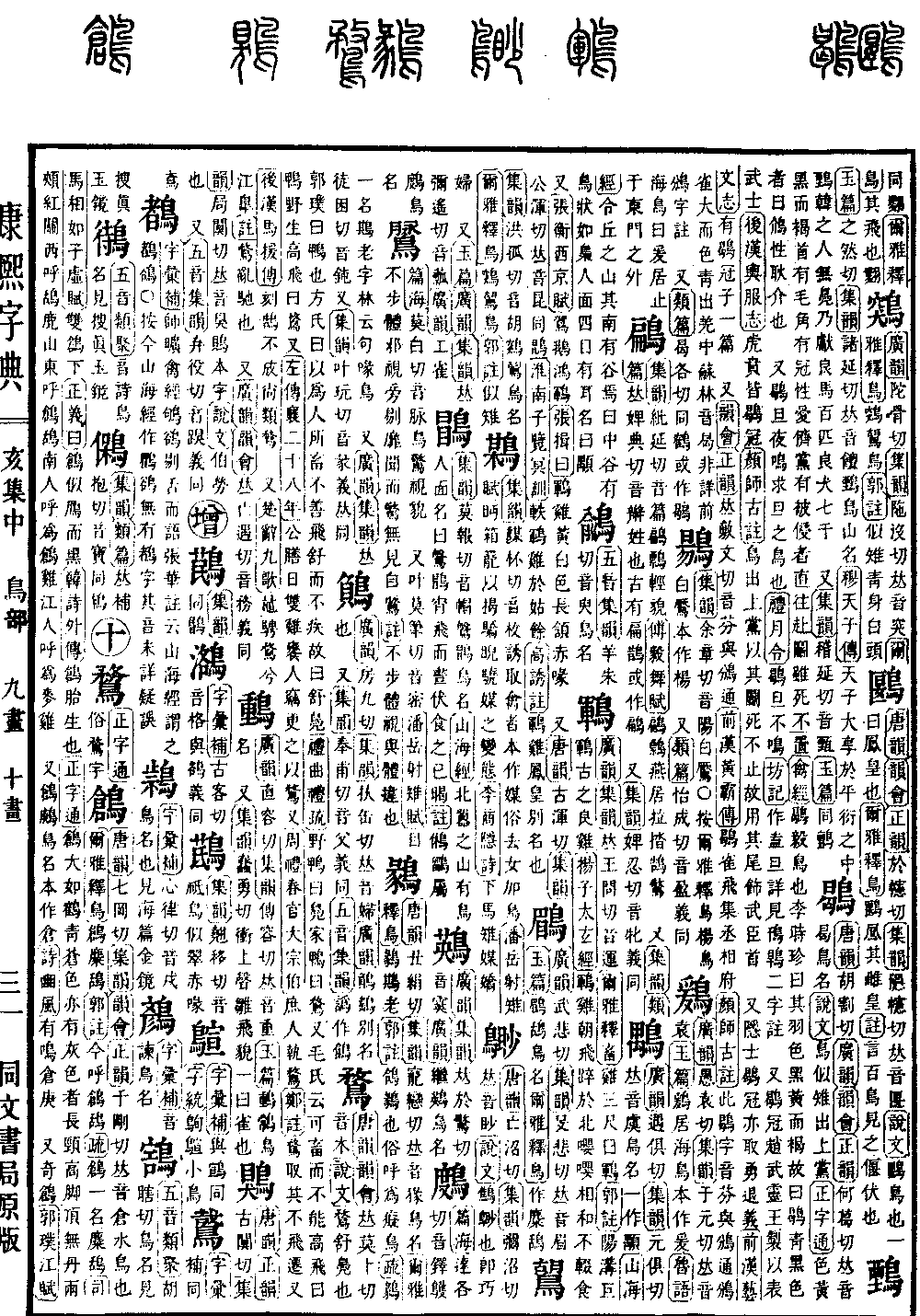
Kangxi Dictionary Stroke Count: 20
Page 1495, Entry 21
Tang Rhymes (Tangyun), Rhyme Collection (Yunhui): Pronounced mù. Shuo Wen: Wù is a domestic wild duck. Guo Pu says: It is a duck. Mr. Fang says: Because it is raised by people, it does not fly well; it is relaxed and not swift, so it is called a relaxed wild duck. Book of Rites (Liji), Commentary on the Quli: A wild duck is called fu, a domestic duck is called wu. Additionally, Mr. Mao says: What can be raised but cannot fly high is called a duck, while what is wild and flies high is called wu. Also, Zuo Tradition (Zuozhuan), 28th Year of Duke Xiang: For the Duke's daily meals, there were two chickens, but the cook secretly replaced them with a duck. Also, Rites of Zhou (Zhouli), Spring Officials: Commoners hold a duck. Zheng's Commentary: A duck is chosen because it does not migrate by flight. Also, History of the Later Han (Hou Hanshu), Biography of Ma Yuan: If you try to carve a swan and fail, it still resembles a duck. Also, Songs of Chu (Chuci), Nine Songs: Galloping and running wildly along the river bank. Commentary: Wu means to run in disorder. Also, Extensive Rhymes (Guangyun), Rhyme Collection (Yunhui): Pronounced wù. Meaning is the same.