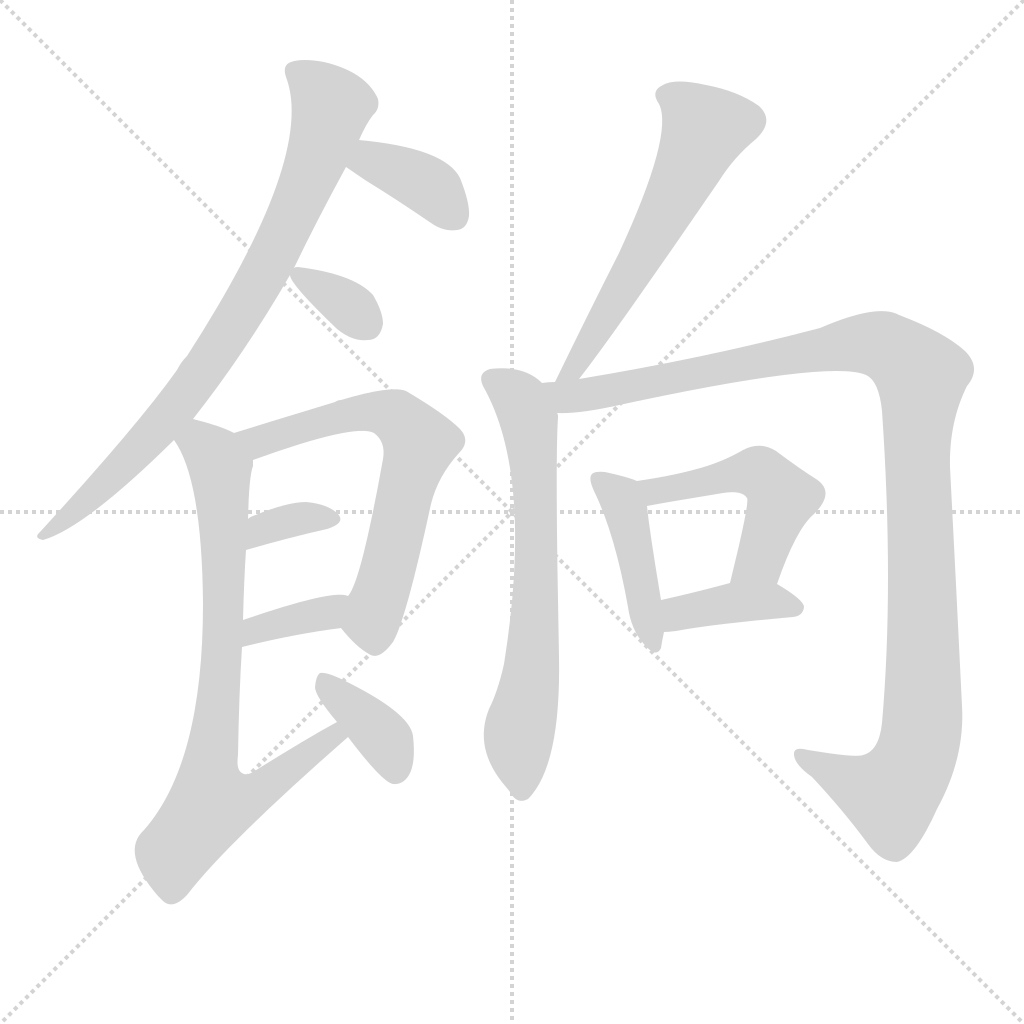
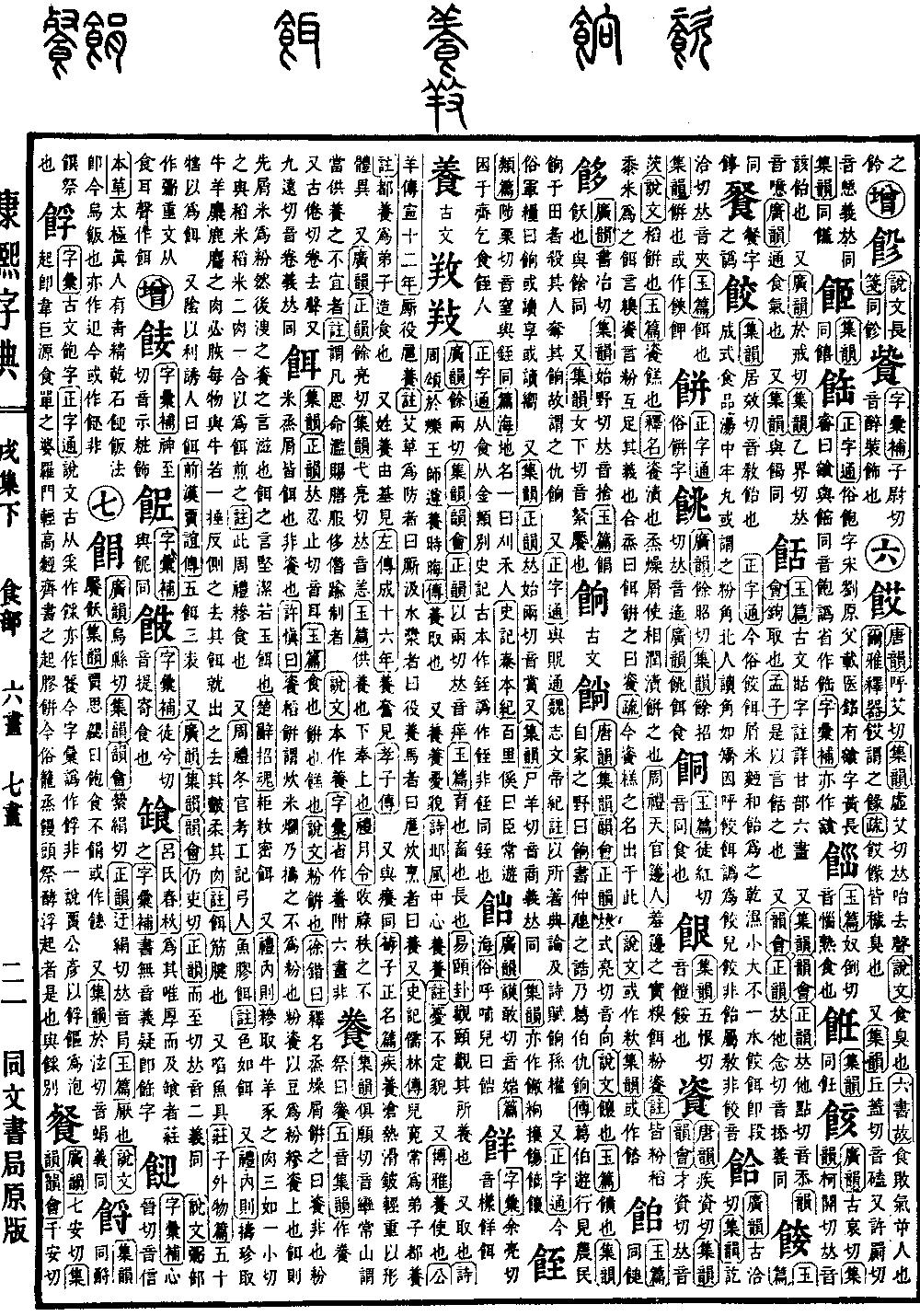
Xu Collection, Lower Volume
Radical: Food (shí)
Kangxi Strokes: 15
Page 1419, Entry 21
Ancient form.
Tang Rhyme (Tangyun), Collection Rhymes (Jiyun), Rhyme Compendium (Yunhui), Correct Rhymes (Zhengyun): Pronounced xiang (falling tone).
Shuowen Jiezi (Shuowen): To gift food.
Jade Chapter (Yupian): To present as a gift.
Collection Rhymes (Jiyun): Sending food from one's own home to the fields is called xiang.
Book of Documents (Shangshu), Announcement of Zhong Hui: It was the Earl of Ge who opposed the food delivery.
Commentary: The Earl of Ge was roaming outdoors when he saw farmers delivering food in the fields; he killed the person and seized the food, hence this is referred to as opposing the food delivery.
Also, Standard Character Guide (Zhengzitong): Used interchangeably with kuang (to bestow).
Records of the Three Kingdoms (Weizhi), Annals of Emperor Wen, Commentary: Sending the works of Dian Lun and poetic essays to Sun Quan.
Also, Standard Character Guide (Zhengzitong): In current colloquial usage, military provisions are called xiang; some read this as xiang (third tone), others as xiang (falling tone).
Also, Collection Rhymes (Jiyun) and Correct Rhymes (Zhengyun): Pronounced shang (third tone).
Also, Collection Rhymes (Jiyun): Pronounced shang (first tone).
The meanings are the same.
Collection Rhymes (Jiyun): Also written as rang or xiang.