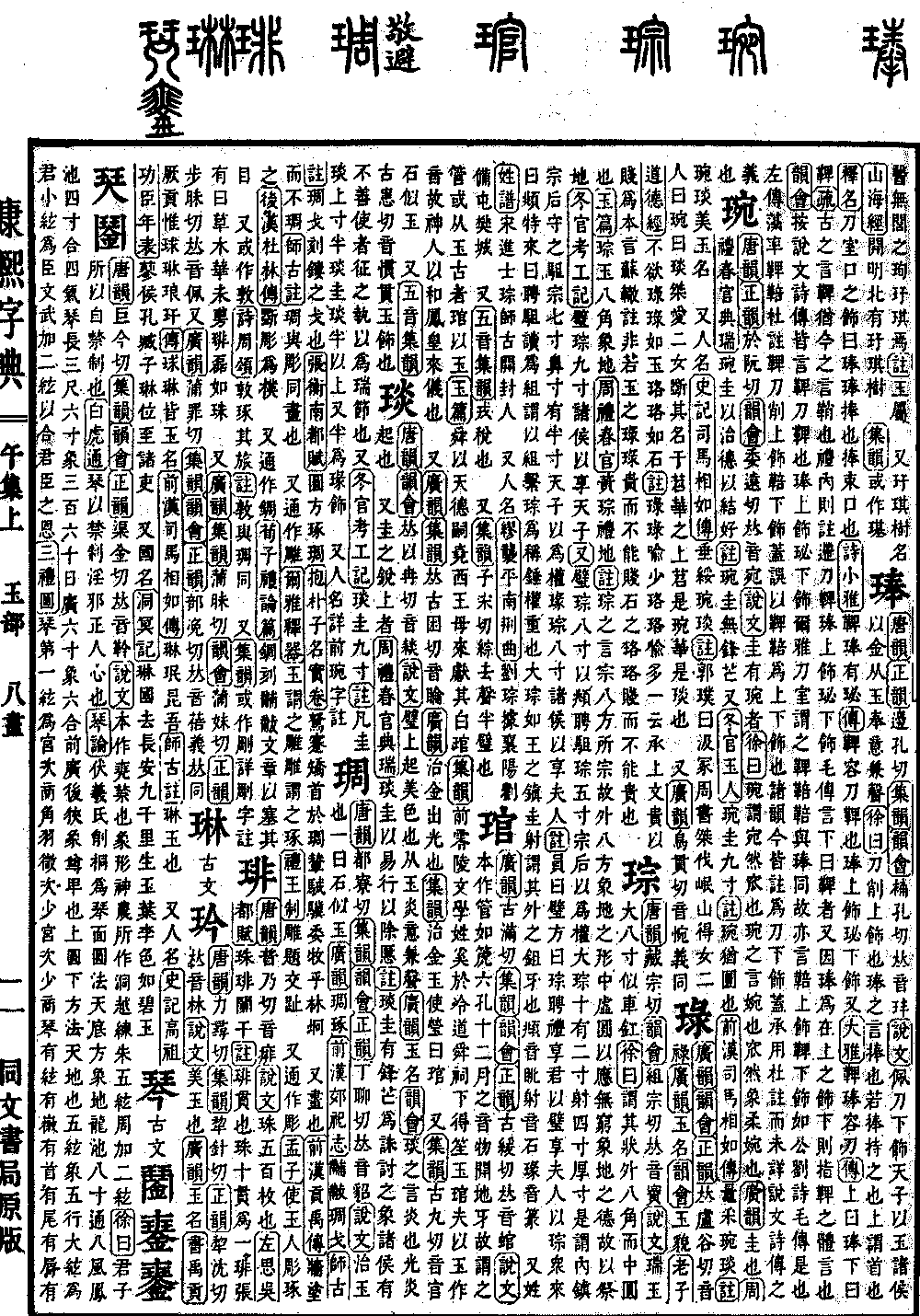
Wu Collection, Upper Volume
Radical: Jade (yù)
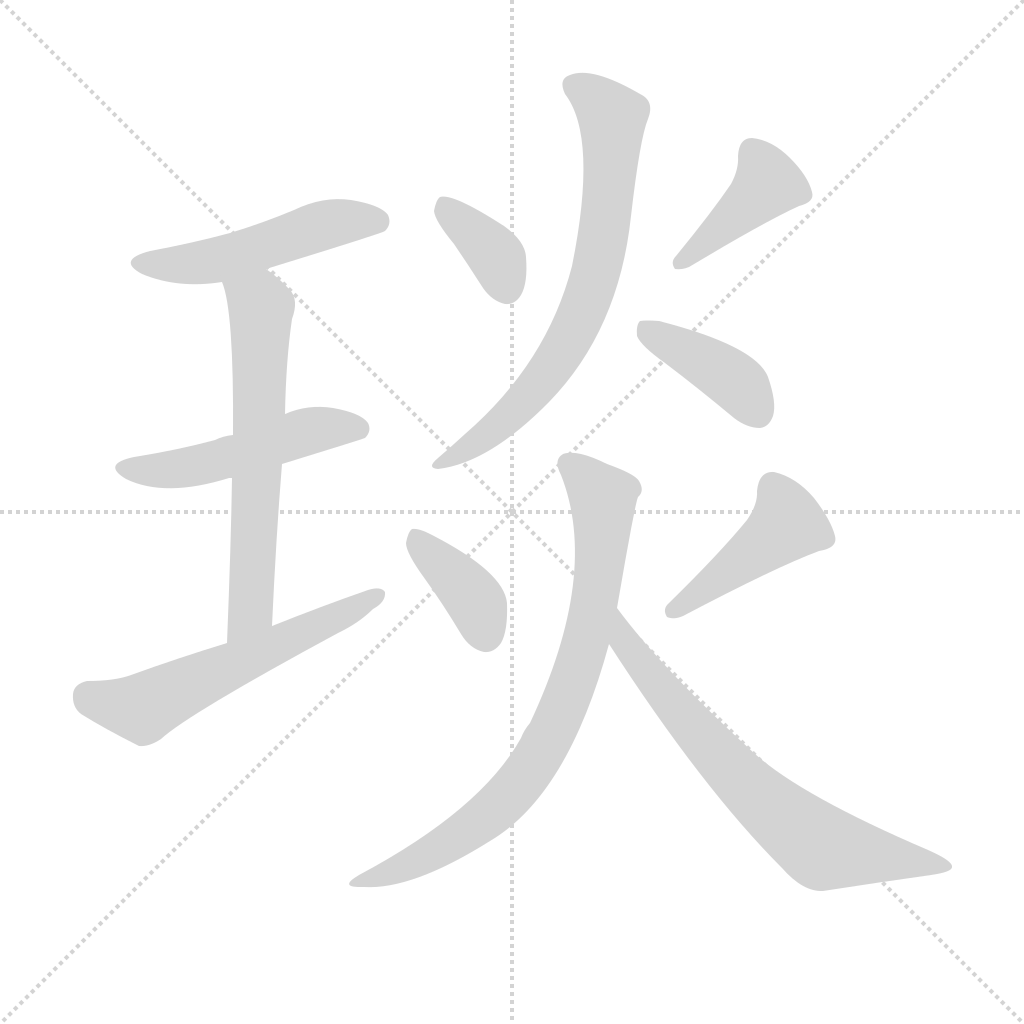
Yan
Kangxi Strokes: 13
Page 735, Entry 06
Tang Dynasty Rhymes (Tangyun), Collection of Rhymes (Yunhui): Pronounced yan (rising tone).
Explaining Graphs and Analyzing Characters (Shuowen): The beautiful luster appearing on jade. The character is formed with jade as the radical, and flame (yan) functions as both meaning and sound.
Broad Rhymes (Guangyun): A type of jade.
Collection of Rhymes (Yunhui): The character yan takes its meaning from flame, referring to light rising like fire. It also refers to a gui (a ritual tablet) with a sharp upper end.
Rites of Zhou (Zhouli), Spring Officials, Canon of Regalia (Dianrui): Use the yan-gui to urge the correction of conduct and eliminate evil.
Commentary: The yan-gui has a sharp point, symbolizing execution and punitive expeditions. When feudal lords engage in misconduct, the Son of Heaven sends envoys to suppress them, carrying the yan-gui as a seal of authority.
Winter Officials, Record of Trades (Kaogongji): The yan-gui is nine inches long.
Commentary: For all ritual tablets, the yan-portion (the sharp, upper end) is one and a half inches long; for the yan-gui, the yan-portion is one and a half inches plus an additional half inch for decorative carving.
Also used as a personal name. See the detailed entry under the character wan for further explanation.