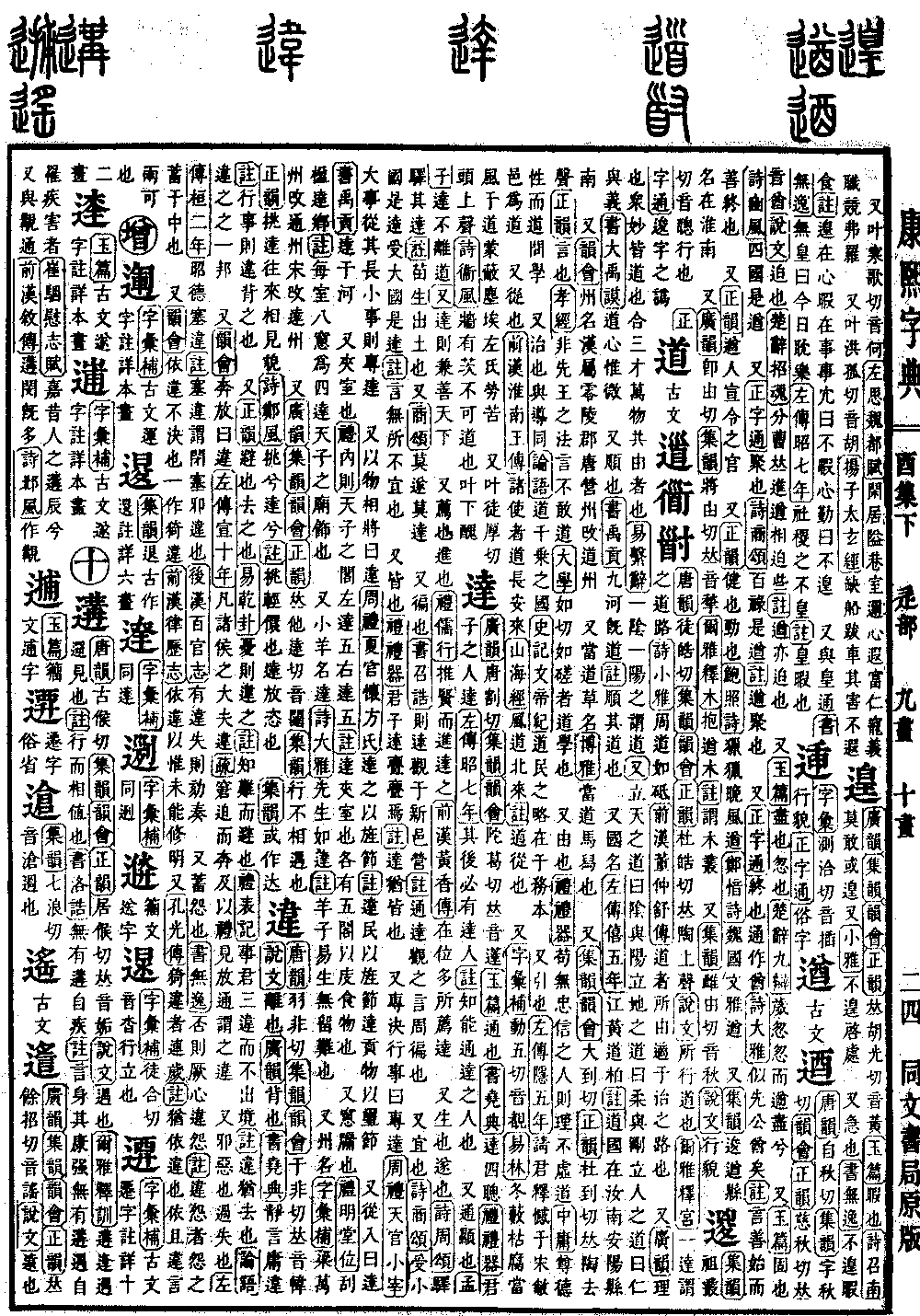
You Collection, Lower Volume
Radical: Walk (chuò)
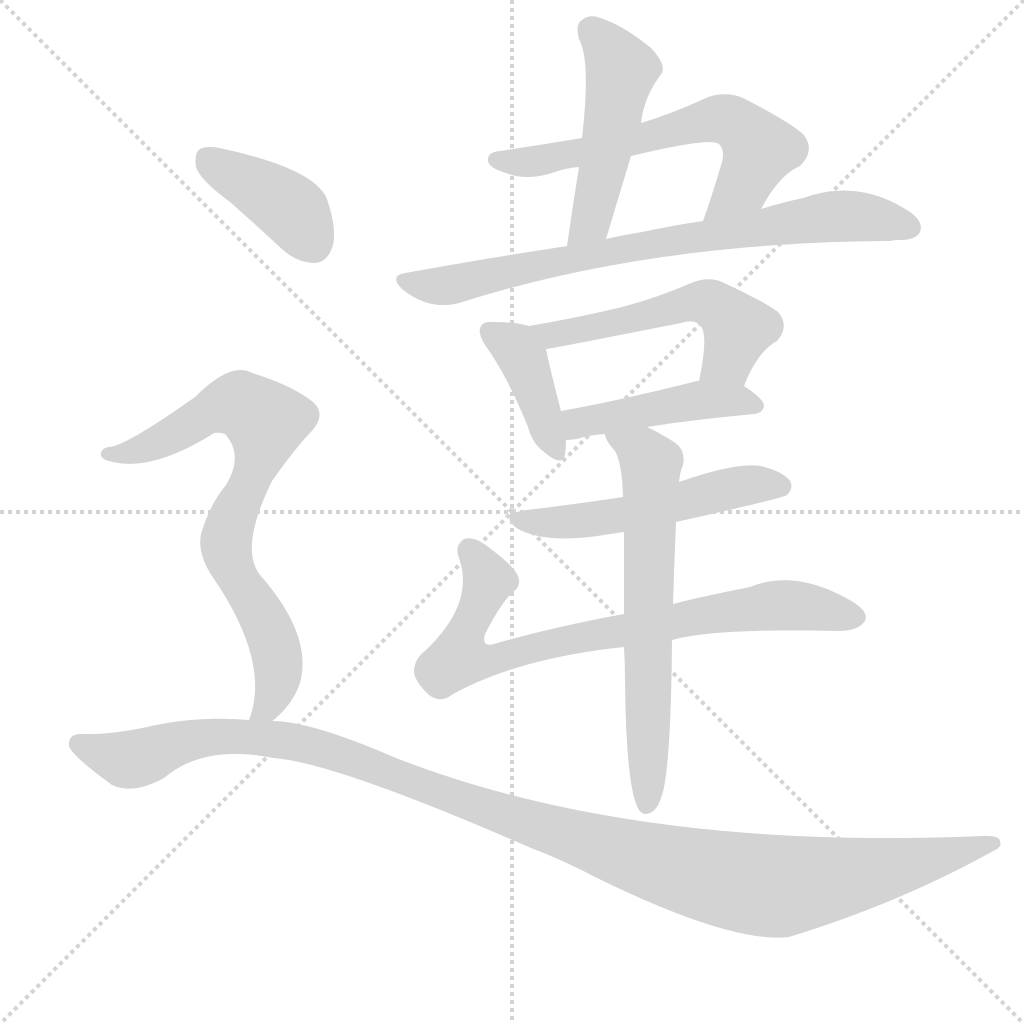
Character: Wei
Kangxi Strokes: 16
Page 1262, Entry 11
Pronounced wei.
Shuowen Jiezi (Shuowen): To depart.
Guangyun: To turn the back on.
Book of Documents (Shangshu): Silent words are yet often contrary. Note: When it comes to acting, one goes against them.
Zheng Yun: To avoid, to leave.
Book of Changes (Yijing): When worried, one avoids it. Note: To know difficulty and avoid it.
Book of Rites (Liji): Serving a ruler, one may remonstrate three times, and if he does not listen, leave the state. Note: To leave.
Analects (Lunyu): To leave for another state.
Yunhui: To run away or flee is called wei.
Zuo Tradition (Zuozhuan): Generally, the grandees of the feudal lords flee. Commentary: Being forced by circumstances or being banished by ritual, both are called wei.
Also, evil or wickedness; also a fault or error.
Zuo Tradition (Zuozhuan): Manifest virtue and block out the wicked. Note: To block out the wicked means to obstruct and seal off evil.
History of the Later Han (Hou Hanshu): If there are faults or errors, then impeach and memorialize.
Also, to harbor resentment.
Book of Documents (Shangshu): If not, their hearts will harbor resentment. Note: Those who harbor resentment are those whose resentment is accumulated within.
Yunhui: Yiwei means indecisive. Also written as yiwei.
History of the Former Han (Hanshu): Hesitating and pondering, unable to cultivate clarity.
Hanshu: Lingering for several years. Note: Same as yiwei. Hesitating and diverging, meaning not committing to either side.